Choosing between Kraken Pro vs Wallet often comes down to what a person actually wants to do with crypto assets, since one side is built for active trading and market access while the other centers on self-custody and everyday spending. Understanding the split between It Pro vs Wallet helps clarify which tool fits a given routine, whether that means watching order books or simply holding and moving funds.
Understanding Kraken’s Two-Platform Approach
Kraken has grown into one of the larger crypto platforms since launching more than a decade ago, and it now serves millions of people across different regions. Rather than forcing every type of user into one interface, Kraken separates its offering into distinct experiences. One side is positioned as a command center for active traders, covering crypto, derivatives, and tokenized stocks. The other side focuses on self-custody, letting people hold and manage assets directly instead of leaving them parked on an exchange, while also supporting everyday spending through a dedicated card and global payment network.
Kraken Pro: Advanced Trading Tools and Market Access
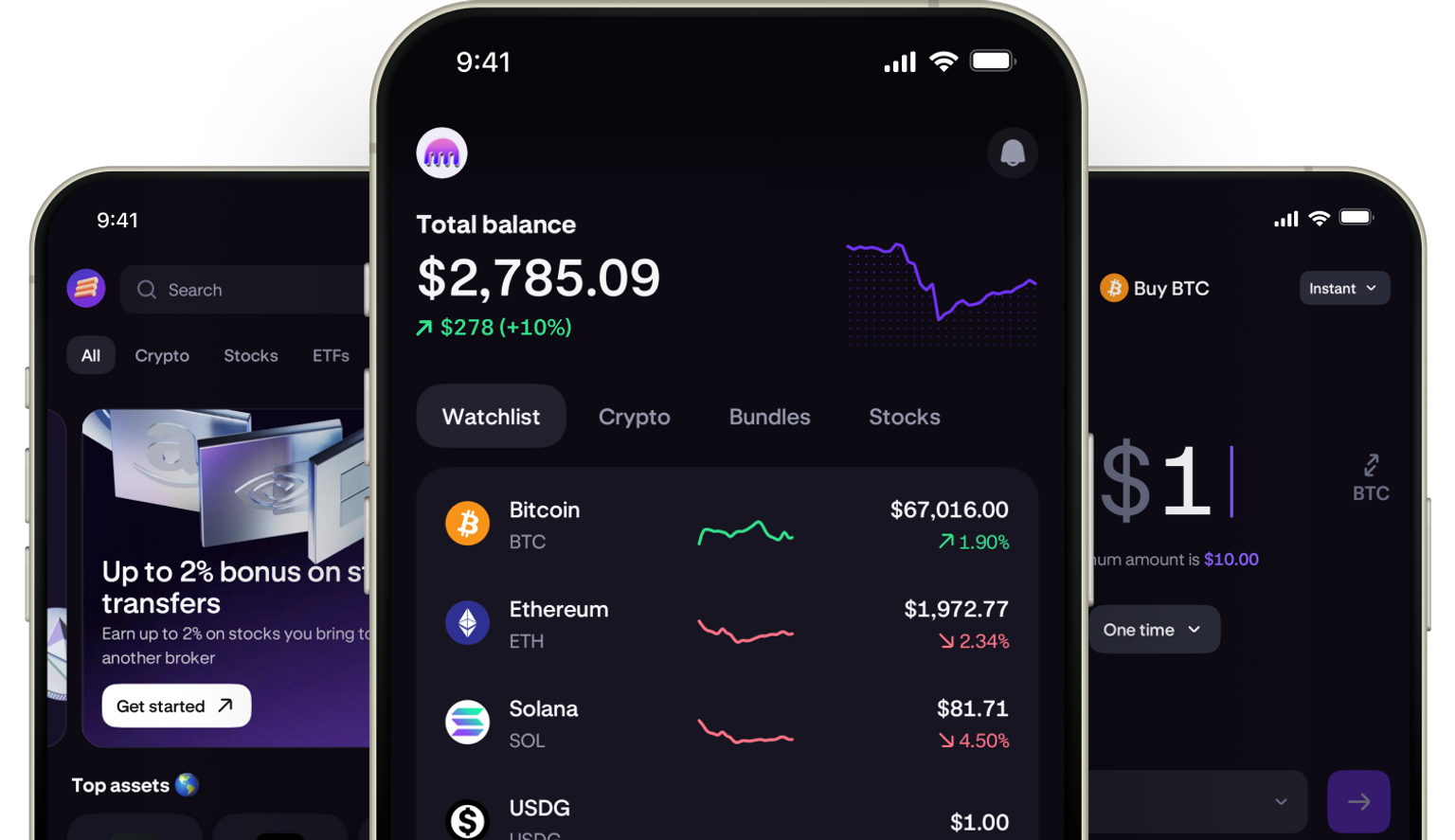
The brand Pro gives access to more than 600 crypto pairs alongside over 11,000 stocks and ETFs, available through web, mobile app, and API. That range extends into tokenized equities too, through xStocks, which allow trading of tokenized shares from companies such as Apple and NVIDIA. Trades on this tokenized product clear instantly rather than waiting on settlement delays, and dividends on supported shares are automatically reflected through token balance adjustments.
A command line tool called Kraken CLI is also part of the lineup, built for AI agents and automated strategies across global markets. This signals that the trading side is not only aimed at manual traders but also at programmatic access for more technical users. For anyone comparing Wallet on sheer market breadth, the trading platform is clearly the side built for reach and execution speed.
Spot, Margin, and Derivatives Trading on Kraken Pro
Within It Pro, trading is not limited to simple spot buying and selling. Margin trading is available, letting eligible users trade with leverage of up to 10x, and the platform notes there is no expiry and no forced rolls on these positions. Futures and derivatives are also part of the lineup, including perpetual futures and CME-cleared contracts, which the brand’s own learn content describes as spanning 300+ perpetual markets industry-wide.
Derivatives trading is explicitly flagged as carrying significant risk and is described as not suitable for all investors. Margin trading eligibility also depends on certain limitations, so access varies by account and region. Even so, the breadth of products puts this trading venue in a different category from a basic buy-and-hold app, which is part of why the Kraken Pro vs Wallet comparison matters for anyone trying to pick the right tool for a given strategy.
Real-Time Data, Charting, and Order Management in Kraken Pro
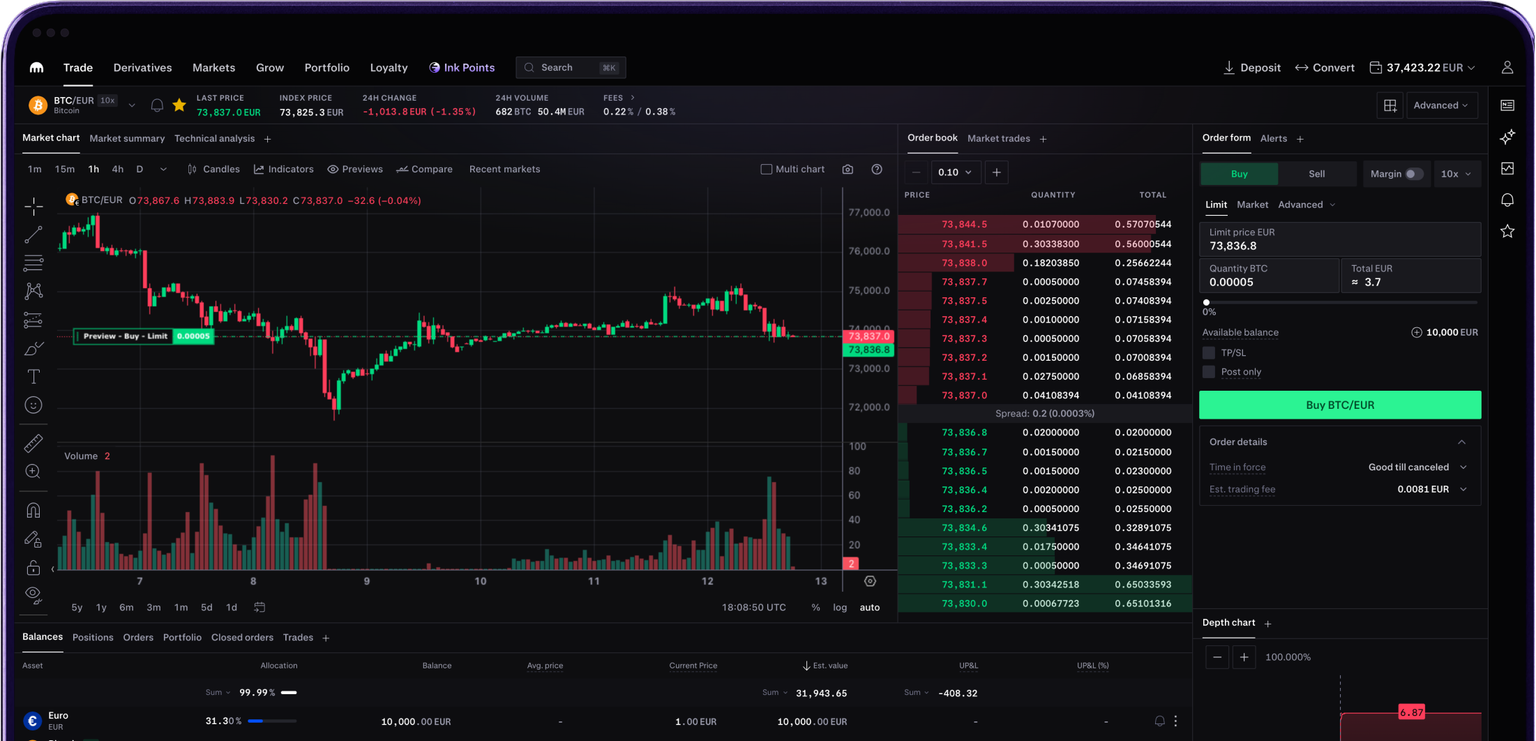
Trading tools inside The brand Pro include customizable charting, limit orders, real-time data feeds, and advanced analytics. These are paired with what the platform describes as strong liquidity, which matters for anyone placing larger orders without excessive slippage. The interface is built to support frequent monitoring, order adjustments, and fast execution across many markets at once.
A subscription layer called Kraken+ also sits alongside the core trading tools, offering fee-free trading up to a stated monthly volume along with boosted rewards on select stablecoins. Subscribers get early access to tools such as Atlas, which is described as bringing crypto insights, sentiment, and trend analysis into one chat interface. That combination of data tools and order management is what separates casual trading from the more active approach the trading platform is built around.
Kraken Wallet: Self-Custody and Global Spending
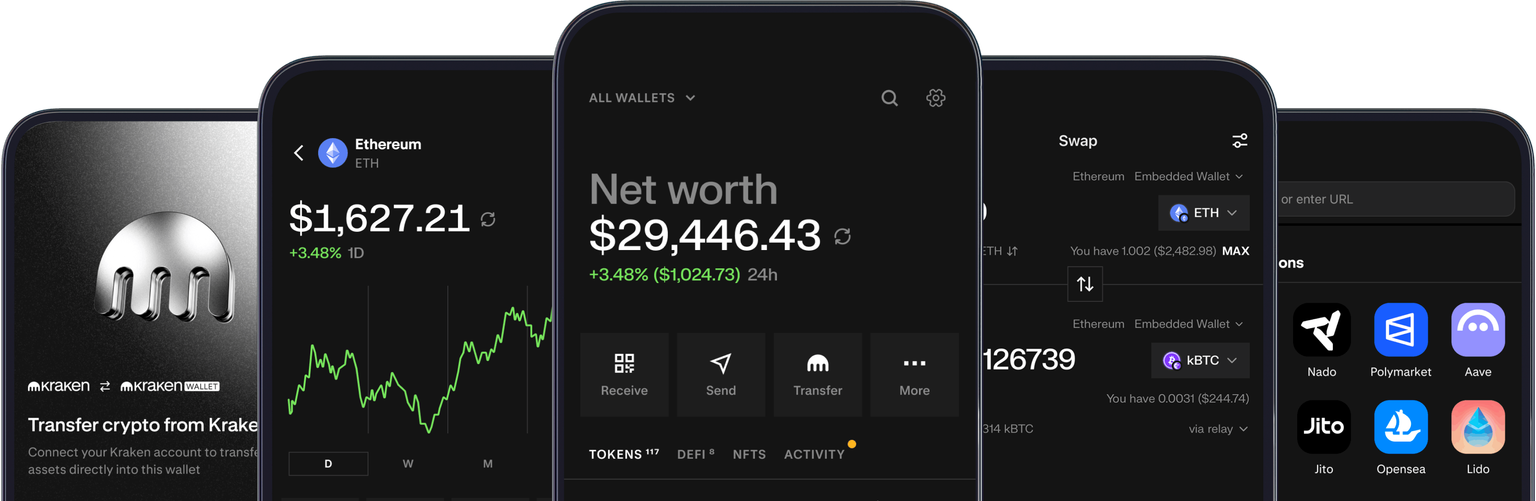
Kraken Wallet puts the focus on holding assets directly rather than trading them actively, letting people deposit, earn, and trade across DeFi from both web and mobile while keeping custody of their own keys. This self-custody model is a clear departure from leaving funds sitting on an exchange order book, since control of the private keys stays with the account holder rather than the platform.
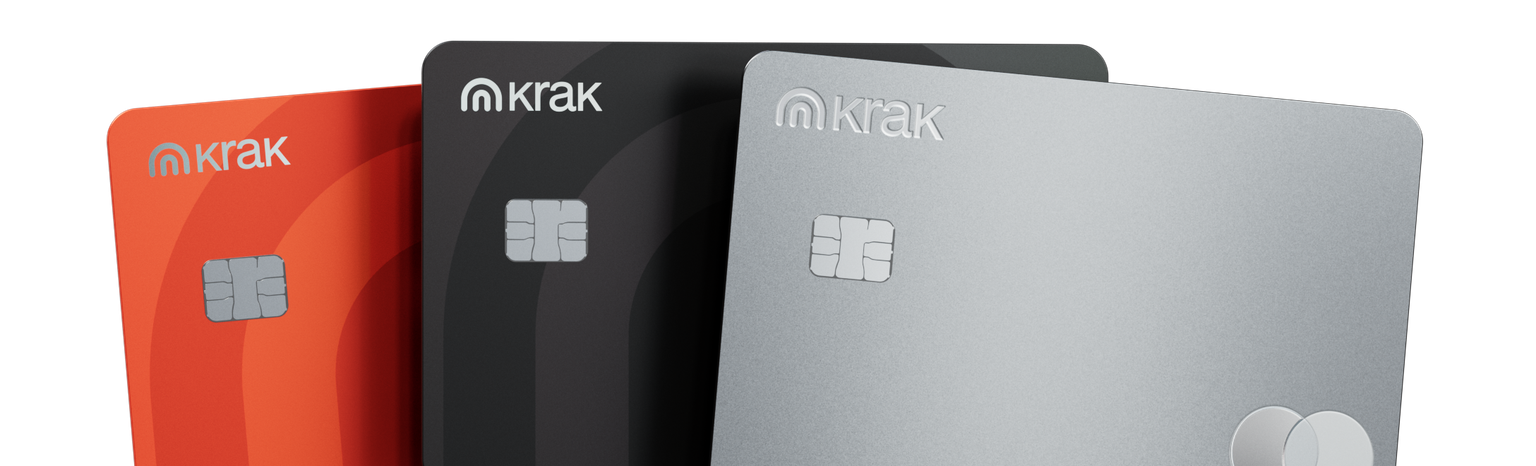
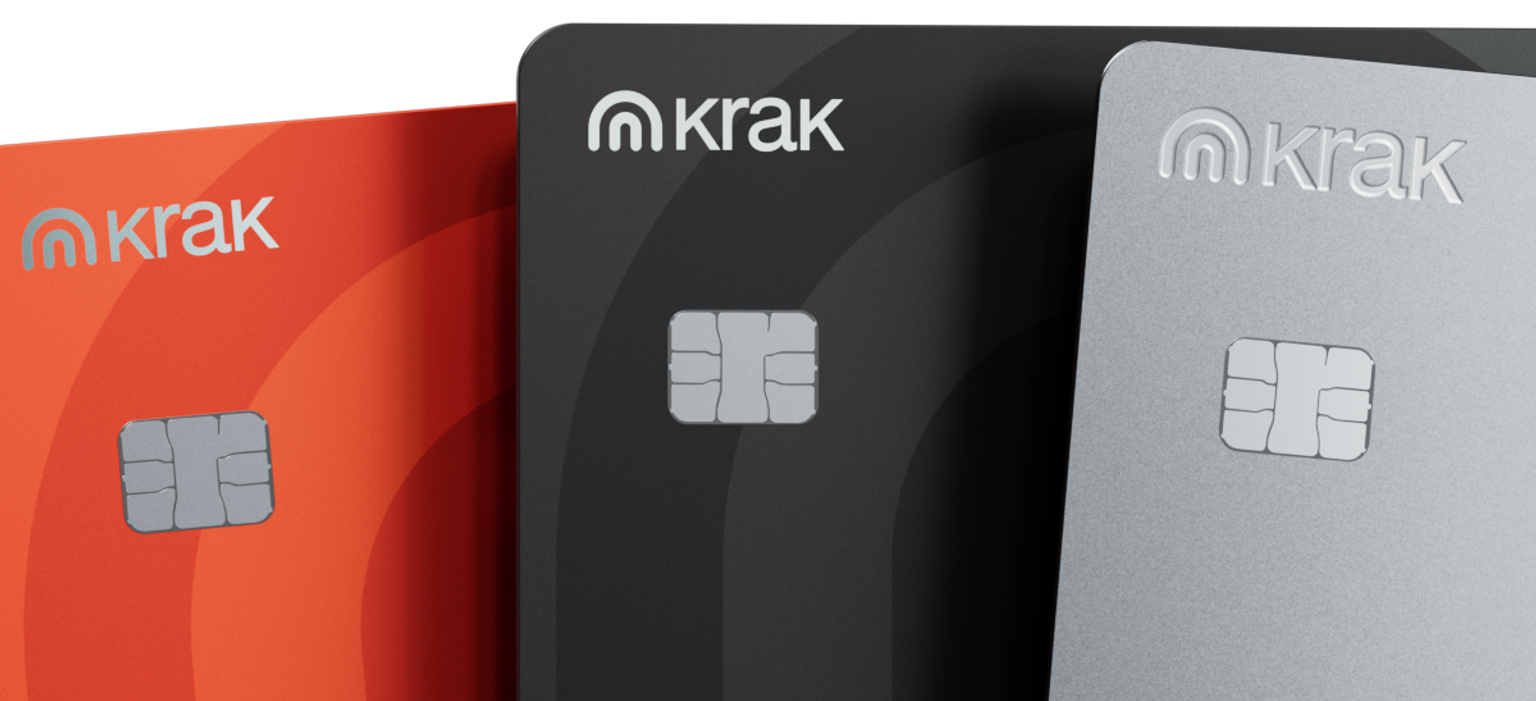
Beyond custody, there is also a global money app experience, letting crypto or cash be spent at more than 80 million merchants worldwide with no fees on sending funds internationally. A linked card extends this further, offering up to 2% cashback in BTC or EUR on every spend, support for more than 600 currencies, and no transaction, FX, or ATM fees. Cardholders can also set a spending order across balances, choosing which assets get spent first and locking others so they stay untouched at checkout.
- The trading platform centers on active trading across crypto, margin, derivatives, and tokenized stocks, while the wallet centers on holding and spending those same assets.
- The trading platform provides real-time charting, limit orders, and API access, whereas the wallet focuses on DeFi access and self-custody controls.
- The trading platform supports leveraged positions of up to 10x, while the wallet has no leverage component at all.
- Traders can tap into the subscription layer for reduced fees and boosted stablecoin rewards, while wallet users benefit more directly from the linked card’s cashback and fee-free international transfers.
- The trading platform is built for monitoring markets continuously, whereas the wallet is built for everyday spending and moving funds across borders.
Security runs across both sides of the platform, with two-factor authentication, passkeys, and physically guarded servers cited as part of the protection standards. Fraud protection and instant card locking are also mentioned specifically for the card, reinforcing that custody and spending tools carry their own safeguards. For anyone weighing It Pro vs Wallet from a security standpoint, both sides draw on the same underlying protections rather than treating one as an afterthought.
Running both sides together is common rather than exclusive, since active strategies on one side can sit alongside self-custodied holdings on the other, with the linked card covering everyday spending abroad. Seen this way, Kraken Pro vs Wallet is less a rivalry and more a reflection of two different jobs crypto can do.