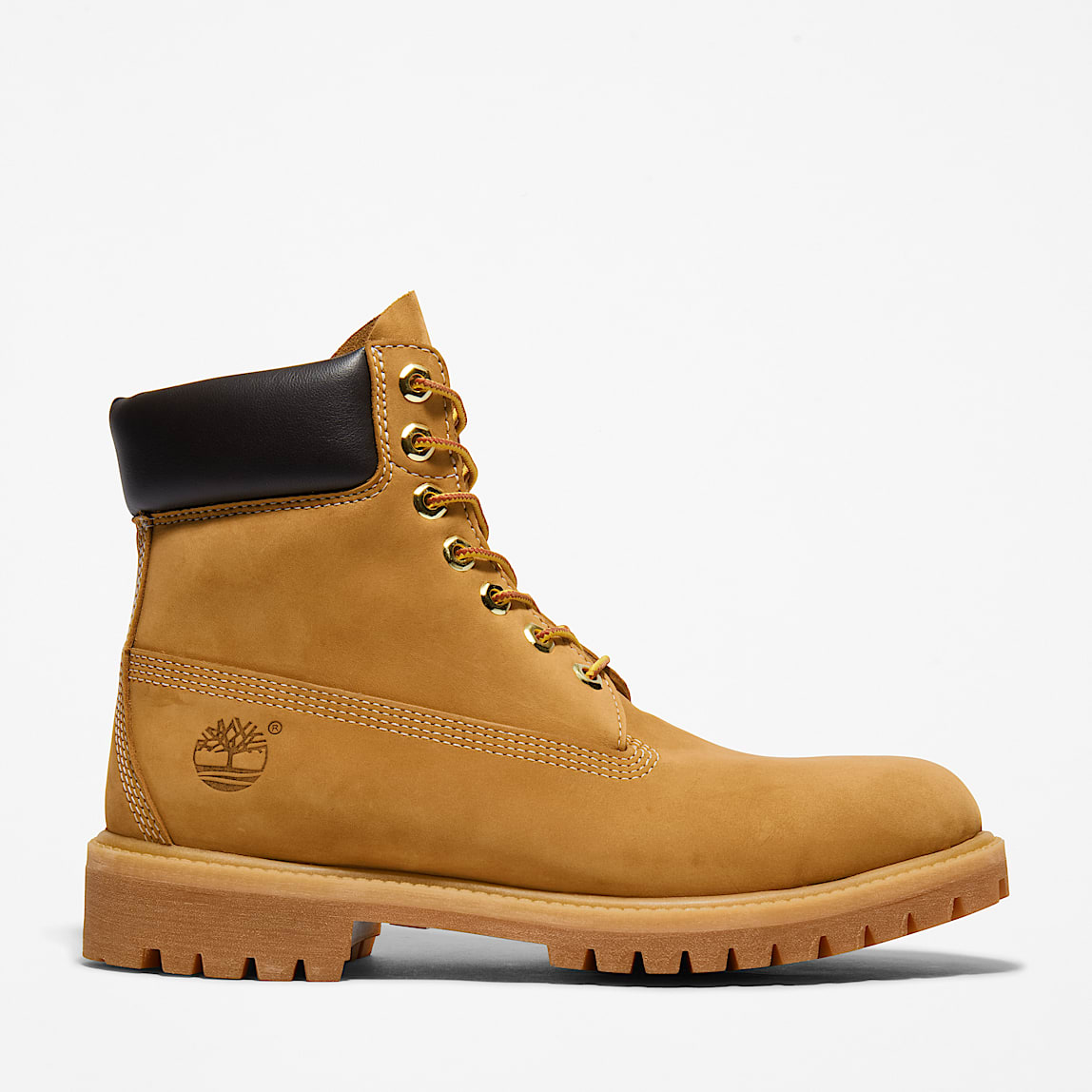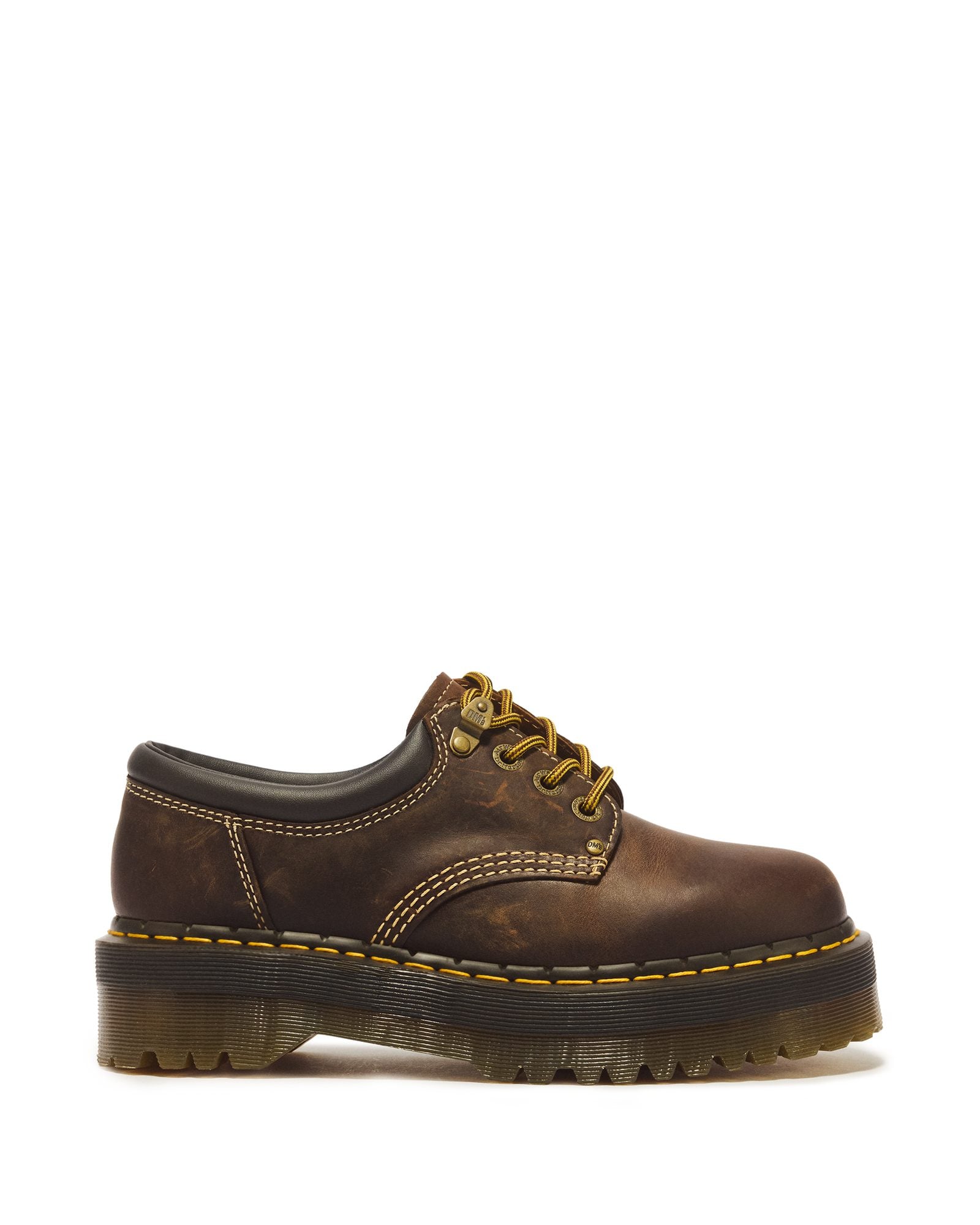
Footwear culture has a handful of silhouettes that outlast every trend cycle, and Dr Martens boots and shoes sit firmly in that category. The brand’s lace-up boots, shoes, and platforms have moved between subculture uniform and everyday wardrobe staple for decades. This overview looks at the core styles, the materials behind them, and how the range fits together for anyone building a collection from the ground up.
What Dr Martens Is and Why It Matters in Footwear
Dr Martens is a footwear brand built around a small set of recognisable silhouettes rather than a constantly shifting catalogue. The current range spans boots, shoes, sandals, bags, and accessories for women, men, and kids, and that same design language, from sole shape to stitching detail, carries across every one of those categories instead of sitting inside a single product type.
What sets Dr Martens boots and shoes apart from generic lace-up footwear is consistency of form. The same eyelet counts, toe shapes, and welt stitching show up across different leathers and colourways. That repetition is part of why the designs read as instantly identifiable, season after season.
The 1460 and 1461: Signature Lace-Up Boot and Shoe Silhouettes
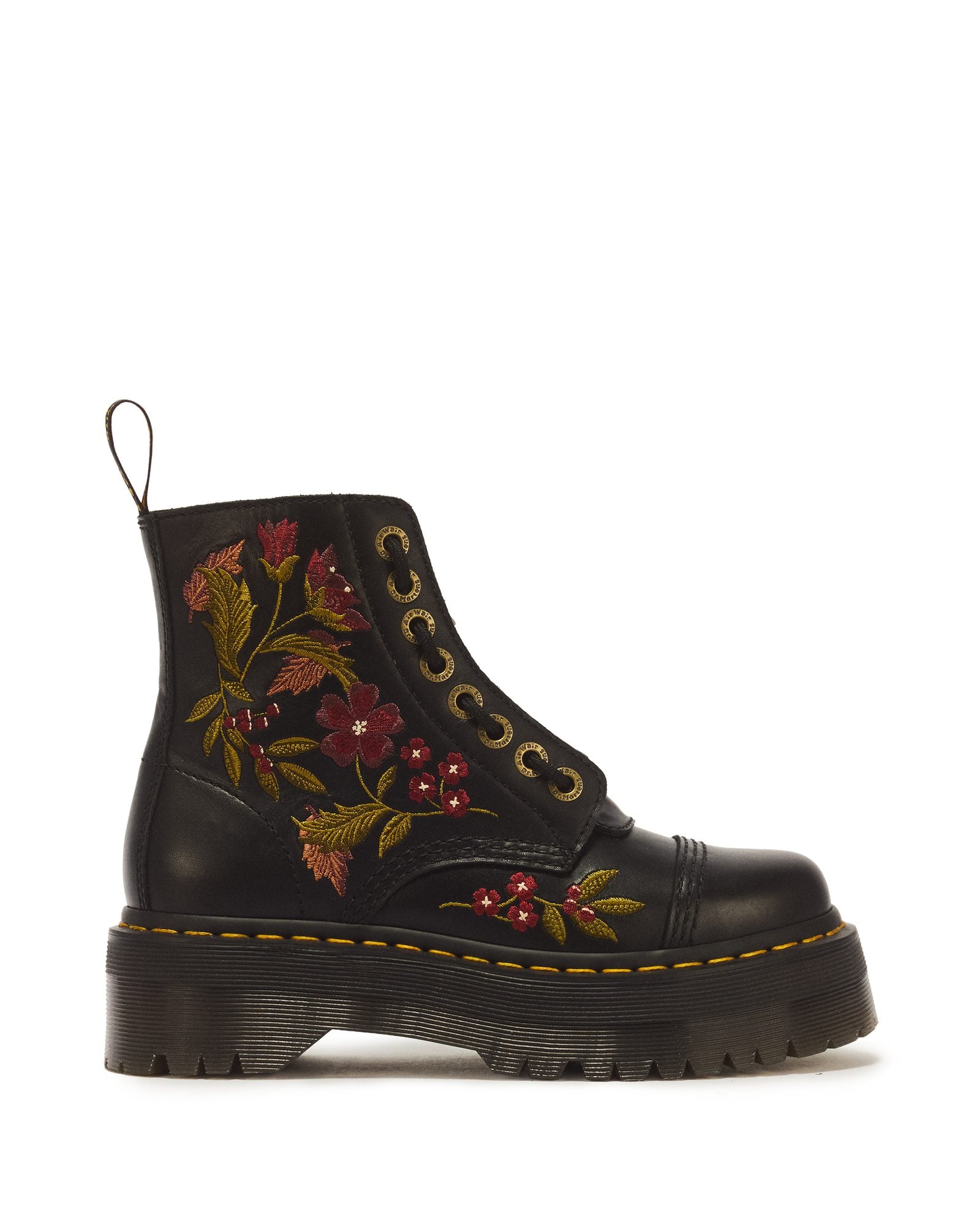
The 1460 is the original lace-up boot from Dr Martens, built with eight eyelets and the yellow welt stitch that has become a visual signature. It appears across multiple leathers, including Crazy Horse leather and smooth leather finishes, as seen in styles like the 1460 Pascal 8 Eye boots. Floral emboss and deboss finishes extend the silhouette into decorative territory without changing its underlying shape.
The 1461 takes the same construction and lowers it into a shoe. It typically appears with three eyelets, such as in the 1461 Floral Emboss 3 Eye Crazy Horse Leather Lace Up Shoes, and also shows up in Oxford form. Together, the 1460 and 1461 effectively define what most people picture when they think of It boots and shoes.
Chelsea Boots and Mary Janes: Alternative Core Silhouettes
Beyond the lace-up family, the range includes pull-on Chelsea boots, such as the 2976 Yellow Stitch Crazy Horse Chelsea Boots. These keep the same yellow welt detailing but swap laces for an elastic side panel, which changes how the boot is put on without changing its material identity.
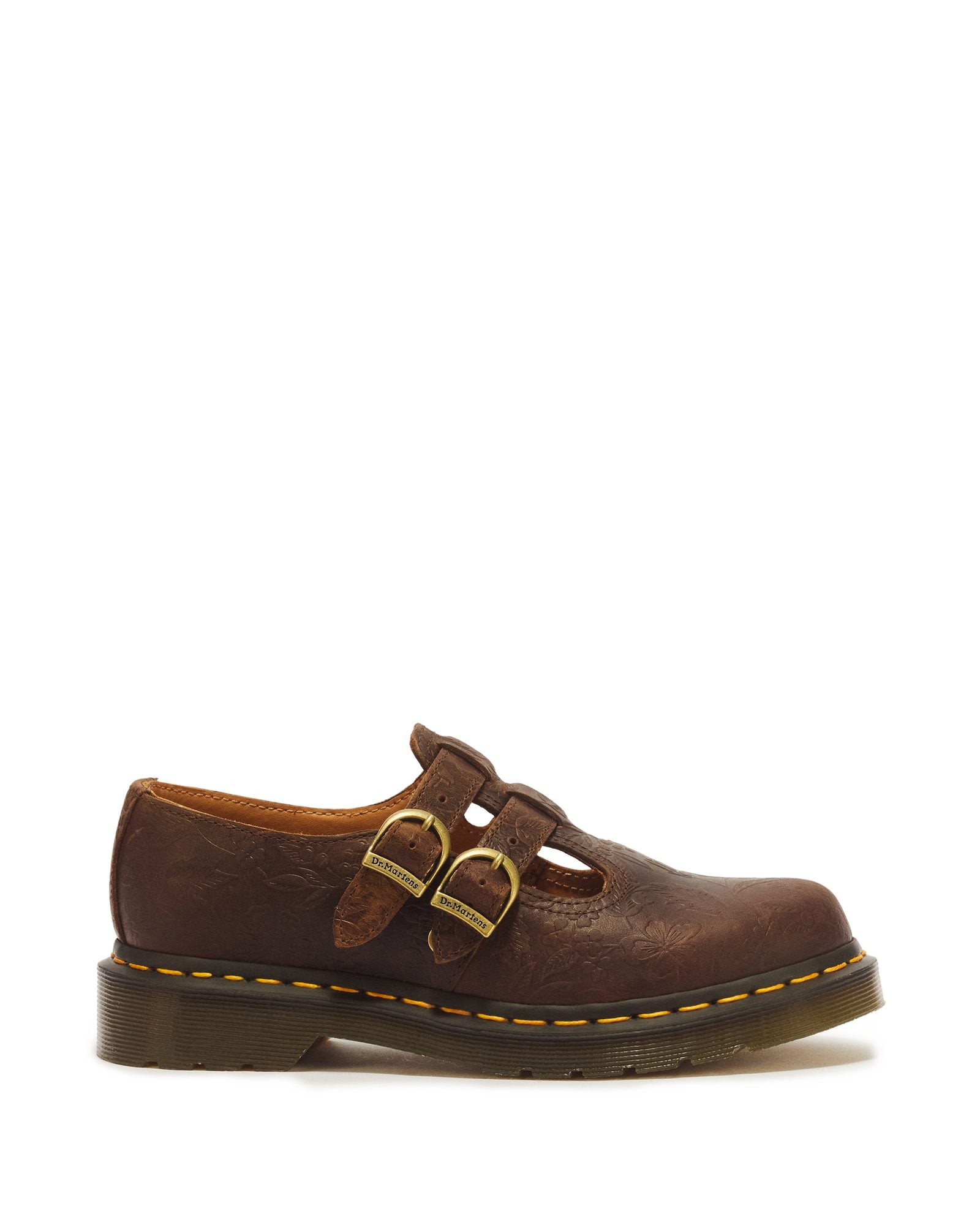
Mary Jane shoes form another consistent line within the catalogue, including the 8065 Smooth Leather and 8065 Crazy Horse Leather Mary Jane Shoes, along with floral emboss versions. These sit closer to the shoe end of the range rather than the boot end, giving the collection a lower-profile option alongside the taller lace-up styles.
Understanding Dr Martens Materials: Crazy Horse Leather and Beyond
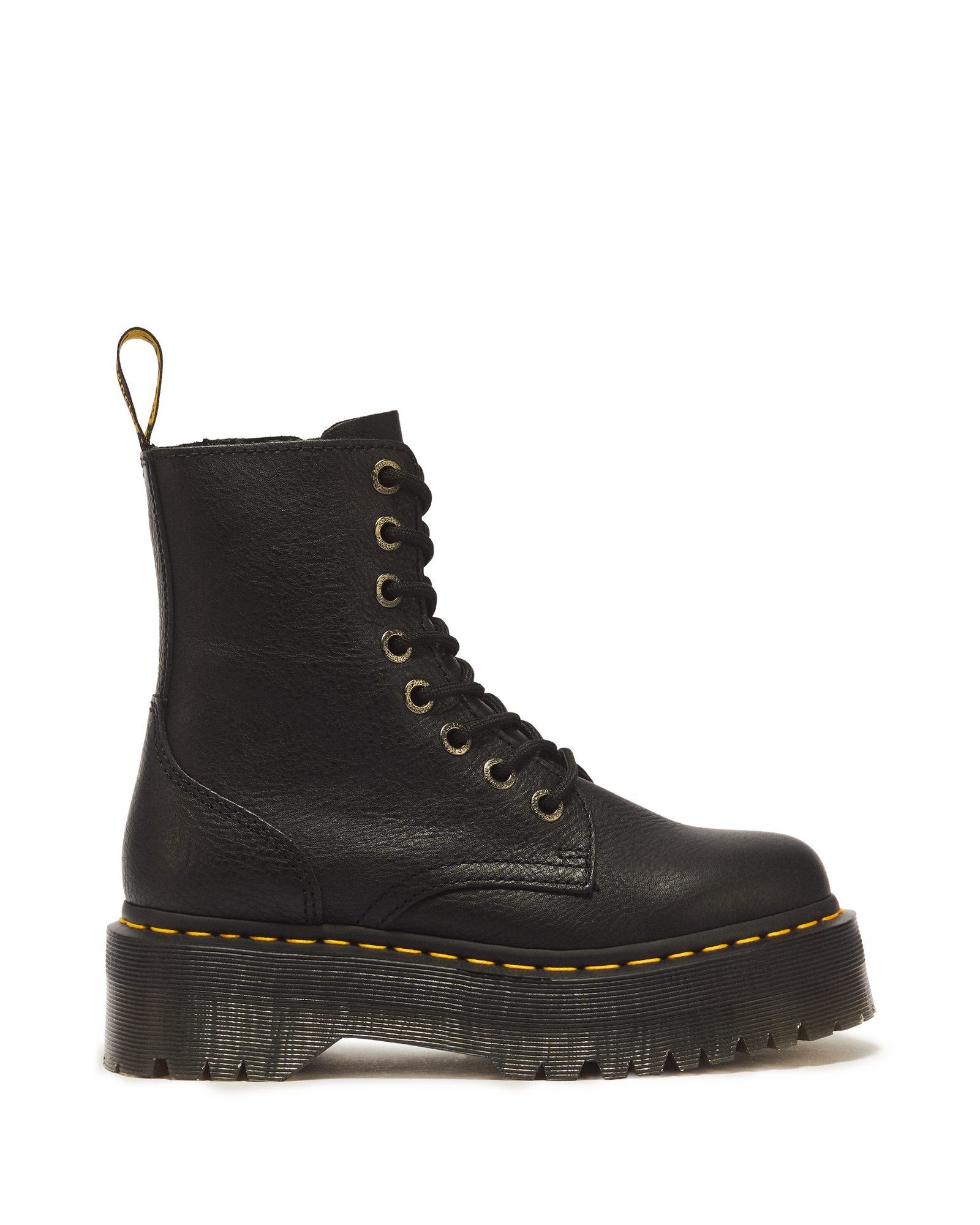
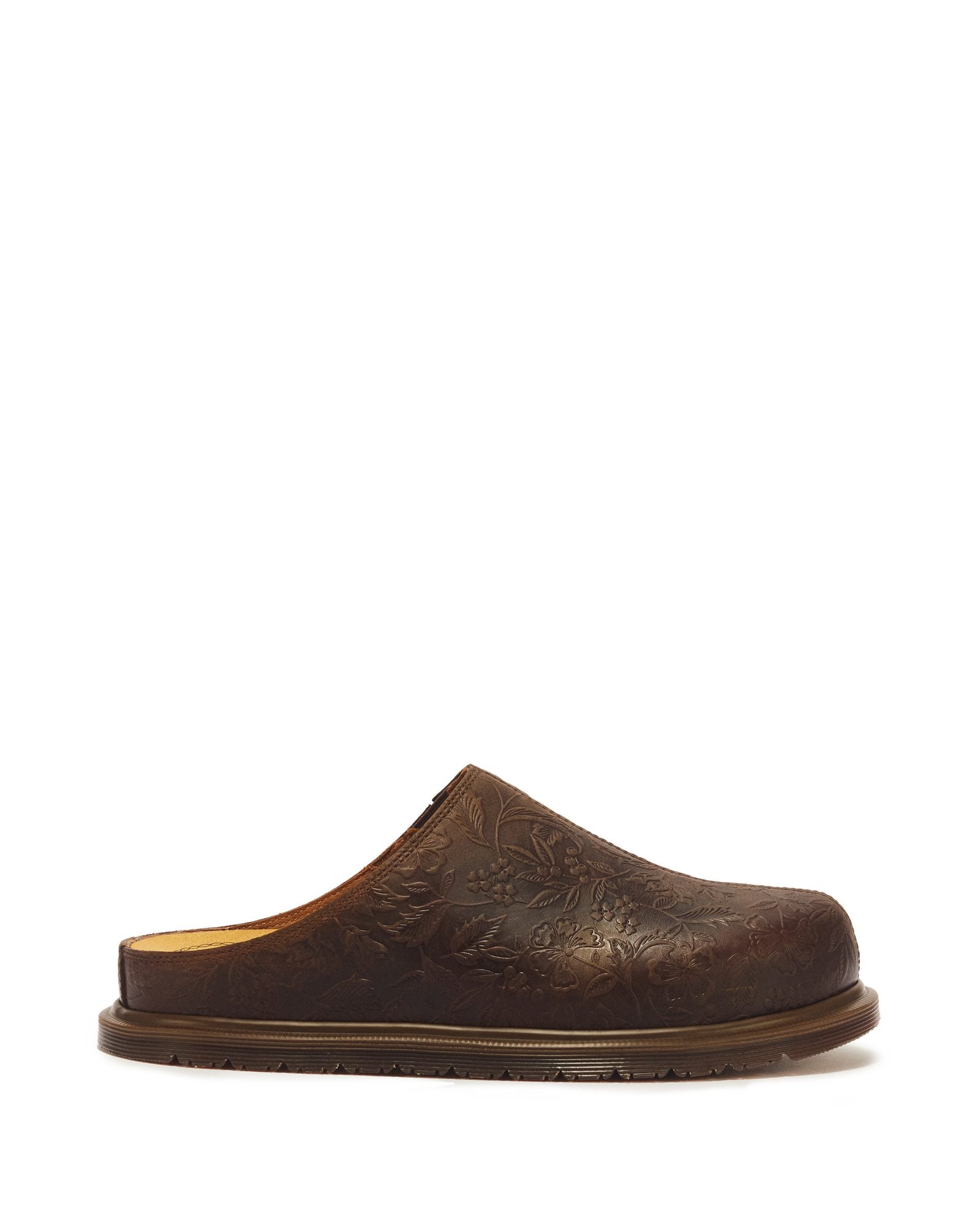
Crazy Horse leather appears repeatedly across the catalogue, turning up on the 8053 Arc Crazy Horse Leather Platform Casual Shoes, the 1460 Crazy Horse Leather Boots, and the San Floral Emboss Crazy Horse Leather Mules, and in each case it carries the same platform or flat construction suited to that specific style. It is one of several leather finishes used across the range, alongside Wanama leather, seen in the Sinclair Floral Wanama Leather Lace Up Boots, and Ambassador leather, found on the 1B99 Bex 14 Eye boots.
Virginia leather also turns up on styles such as the Kasey Virginia Leather Tall Heeled Boots, showing that specific leather types pair with specific silhouettes rather than one uniform material covering every product. Floral emboss and deboss treatments are applied on top of several of these leathers, adding surface pattern without altering the base construction.
Platform Soles and the Signature Bounce
Platform construction is a distinct branch within the Dr Martens boot and shoe lineup, most visible in the Jadon line. The Jadon III Boot Pisa Leather Platforms and the Jadon Floral Emboss 8 Eye Crazy Horse Leather Platform Boots both build the raised sole into an eight-eye lace-up boot shape, one finished in Pisa leather and the other in Crazy Horse leather. The 8053 Arc brings that same platform sole down into a lower, shoe-length silhouette instead of a tall boot shaft.
Marketing language around the brand also references the sole’s bounce directly, tying the platform styles back to the broader identity of the range. This positions the platform sole as a design feature running through specific product lines rather than a one-off style.
Sizing, Care, and Building a Dr Martens Collection
Building out a collection of Dr Martens boots and shoes typically means mixing silhouettes rather than buying variations on a single style. A lace-up boot like the 1460, a lower shoe like the 1461, and a pull-on option like a Chelsea boot cover different occasions within one wardrobe. Shopping the range by category, rather than by individual style name, is often the simpler starting point for a first-time buyer.
The following list outlines how each category within the range tends to function within a broader footwear wardrobe.
- Boots, including the 1460, Chelsea, and Jadon platform styles, form the core of the range and cover lace-up, pull-on, and raised-sole construction.
- Shoes, such as the 1461 Oxford and Mary Jane styles, offer a lower-profile alternative to the boot silhouettes.
- Sandals extend the range into warmer-weather footwear, including styles like the Gryphon Quad Grizzly Leather Sandals.
- Bags round out the product range as a non-footwear category that follows the same leather and hardware language as the boots and shoes.
- Accessories, a further category listed on the site, provide smaller additions that complement the footwear and bag lines.
Dr Martens also runs a resale channel, listed on its site as ReWair, which includes resale, rare pairs, and category-specific listings for women’s and kids’ items. This sits alongside the standard new-product range rather than replacing it, giving a secondary route into the catalogue of Dr Martens boots and shoes. A handful of silhouettes, a short list of leathers, and one recognisable sole shape keep this range easy to recognise at a glance.