Portable power stations have moved from niche camping gear into everyday backup equipment for homes, workshops, and travel. They store electricity in a battery pack and release it through standard outlets, letting appliances, tools, and electronics run without a wall connection. This overview looks at how these devices and related solar storage systems work, and where ecoflow positions its lineup across compact, mid-capacity, and high-output categories.
How Battery Storage and Solar Charging Work Together
A portable power station is essentially a battery housed with an inverter, charge controller, and a set of outlets. It takes in electricity from a wall socket, a vehicle outlet, or a solar panel, then stores it for later use. Home energy storage applies the same principle at a larger scale, often paired with solar panels to offset grid use. Both categories share the same building blocks, just sized differently for the job at hand. The appeal of portable power stations lies in flexibility. Unlike a fixed generator, they can be moved between a balcony, a vehicle, or a garage without installation work. That mobility is part of why the category has grown alongside rising interest in solar panels and off-grid setups.
The RIVER Series: Lightweight Portability for Outdoor Use
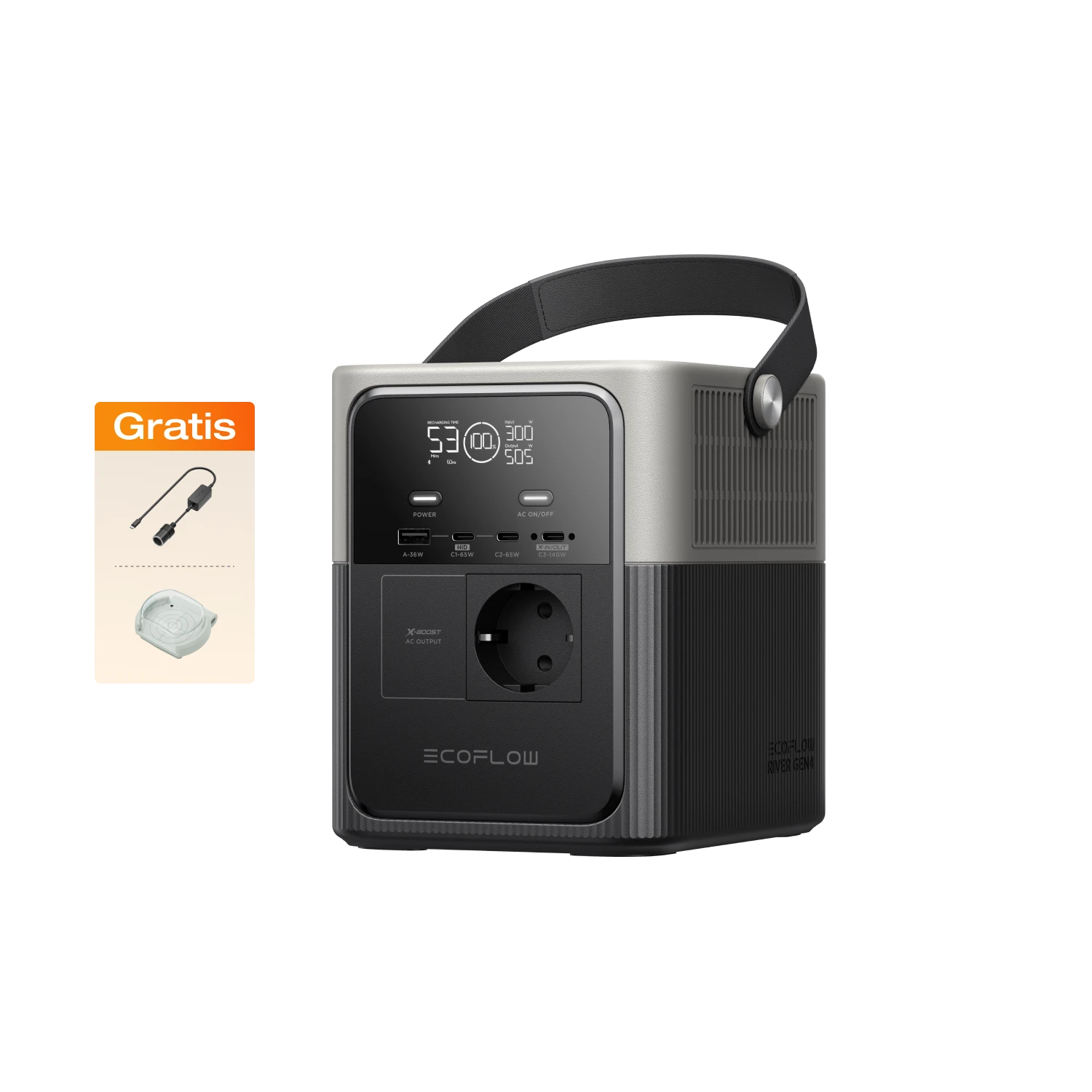
Ecoflow‘s RIVER line targets buyers who prioritize size and weight over sheer output. The RIVER 2 model offers 256 Wh of battery capacity paired with 300 W of continuous output, aimed at smaller devices and short outings. It charges from 0 to 100% in 60 minutes, which the brand describes as considerably faster than typical devices in its class.
The newer RIVER 260 Gen4 continues that direction. It is described as the smallest and lightest unit in its class, with up to 10% longer runtime than its predecessor. It supplies 300 W of AC output, extendable to 600 W through the X-Boost feature, and reaches 0 to 80% charge in just 42 minutes. Its 30 dB operating noise makes it suitable for quiet environments, and a 24/7 intelligent battery protection system is built into the unit.
The DELTA Series: Balanced Power and Capacity for Work and Travel
Stepping up in capacity, the DELTA range is built for scenarios that demand more sustained output, such as power tools or multiple appliances running together. The DELTA 3 Classic holds 1024 Wh and delivers 1800 W of continuous output, with a 3600 W peak through X-Boost support for higher-draw devices. It recharges from 0 to 80% in 45 minutes using AC charging, and completes a full charge in roughly 60 minutes. Further up the DELTA family, the DELTA 3 Max Plus pushes capacity to 2,048 Wh with 3000 W of continuous output and 6000 W peak. Its X-Boost 3.0 feature supports devices drawing up to 3900 W. A DSP chip checks voltage and current every 33 microseconds to maintain a stable sine wave, which matters for sensitive electronics. The lineup also includes a Smart Output Priority feature, letting specific circuits stay active through an app while others are paused.
STREAM Systems: Solar Integration and Home Energy Independence

Where RIVER and DELTA focus on portable use, the STREAM systems lean toward fixed or semi-fixed home setups that connect with solar. The STREAM 5000 and the STREAM AC 5000 both offer 5024 Wh of capacity and up to 3000 W of AC output, with the STREAM 5000 additionally accepting up to 5000 W of solar input and the STREAM AC 5000 built for compatibility with existing solar installations already in place at a property. This split lets a household either start a solar setup from scratch or connect storage to panels already installed. These balcony and home storage systems are built to work alongside solar panels rather than as standalone battery packs. That pairing allows stored solar electricity to be drawn down later, through the home’s existing circuits, reducing dependence on constant grid draw. Ecoflow markets this category specifically around the idea of near-continuous home energy coverage when paired with solar generation.
Battery Technology and Charging Speed in EcoFlow Devices
Across the RIVER and DELTA ranges, ecoflow uses LFP battery cells, a chemistry the brand associates with its five-year warranty coverage on the DELTA 3 Classic. Charging speed is a recurring theme throughout the lineup, branded under the X-Stream fast-charging approach. On the DELTA 3 Classic, X-Stream enables the 45-minute charge to 80% without compromising long-term battery condition, according to the brand’s own product description. Multiple charging paths are built into these portable power stations, including AC wall charging, solar panel input, and vehicle charging through a car outlet. That range of charging options means a unit can be topped up near an outlet at home or through solar panels while traveling. The TÜV Rheinland certification mentioned for the RIVER 2 model specifically addresses safe charging without battery damage, as stated in the brand’s own listing.
Matching Device Capacity to Power Needs
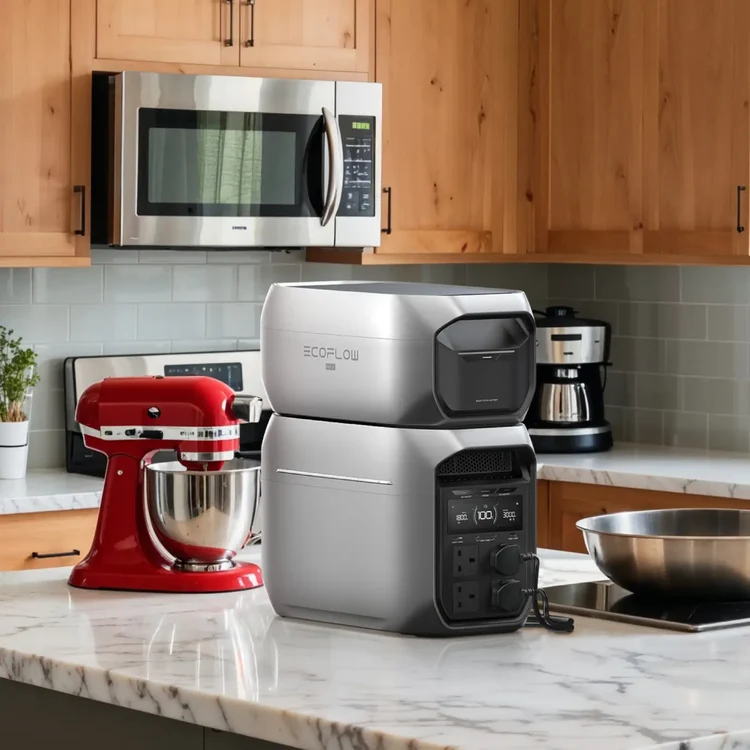
Choosing among compact, mid-capacity, and high-output devices generally comes down to what needs powering and for how long. A lightweight unit in the hundreds of watt-hours suits phones, lights, and small electronics. A higher-capacity unit measured in kilowatt-hours is positioned for kitchen appliances, power tools, or multiple devices drawn simultaneously, as described for the DELTA 3 Max Plus running a microwave, kettle, refrigerator, and blender together.
The list below gathers the specifications worth comparing across models, since portable power stations differ widely across these dimensions even within a single product range.
- Wattage output determines how many and which devices can run at once, with continuous and peak figures both worth checking separately.
- Battery capacity in watt-hours indicates how much total energy is stored, directly shaping how long a device can run before needing a recharge.
- Charging time varies by method, with AC charging generally the fastest option compared with solar or vehicle charging.
- Weight and overall portability affect how easily a unit moves between a vehicle, a balcony, and indoor rooms.
- The number and type of outlets, including AC sockets and USB ports, decide how many devices can connect directly without an adapter.
- Compatible charging methods, such as AC, solar panel input, and car charging, determine how flexible a station is away from a fixed power source.
Reviewing these specifications side by side makes it easier to see how compact units trade capacity for weight savings, while larger systems trade portability for sustained output. ecoflow‘s spread across RIVER, DELTA, and STREAM reflects that same trade-off, with each range built around a different balance of size, output, and charging speed.
Portable power stations and home solar storage keep converging, blurring the line between camping gear and household utility.