LED Grow Lights and Complete Grow Systems Where Spider Farmer Fits in Indoor Cultivation Technology
Indoor cultivation now rests on a handful of interlocking equipment categories, and newcomers often struggle to see how the pieces connect. Choosing indoor grow lights and systems means thinking about lighting, climate, structure, and airflow as one setup rather than separate purchases. Spider Farmer operates across most of these categories, which makes it a useful reference point for mapping the broader ecosystem.
Understanding the Indoor Growing Ecosystem and Its Core Components
Every indoor grow, regardless of scale, depends on a few functional layers working together. Lighting drives photosynthesis, climate control manages temperature and humidity, and a physical enclosure keeps light contained while filtering odour and airflow. Ventilation ties these layers together by removing heat and exchanging stale air for fresh air. Without one of these pieces, the rest of the setup tends to underperform regardless of how advanced the other components are.
That interdependence is why suppliers increasingly sell across categories instead of specialising in a single product. A grower assembling indoor grow lights and systems from scratch has to match wattage to tent size, airflow to canopy density, and controller logic to the number of connected devices. Spider Farmer positions its catalogue around this same logic, offering lighting, tents, and climate hardware under one storefront.
Full-Spectrum LED Grow Lights: How Spider Farmer’s SF and G Series Technology Works
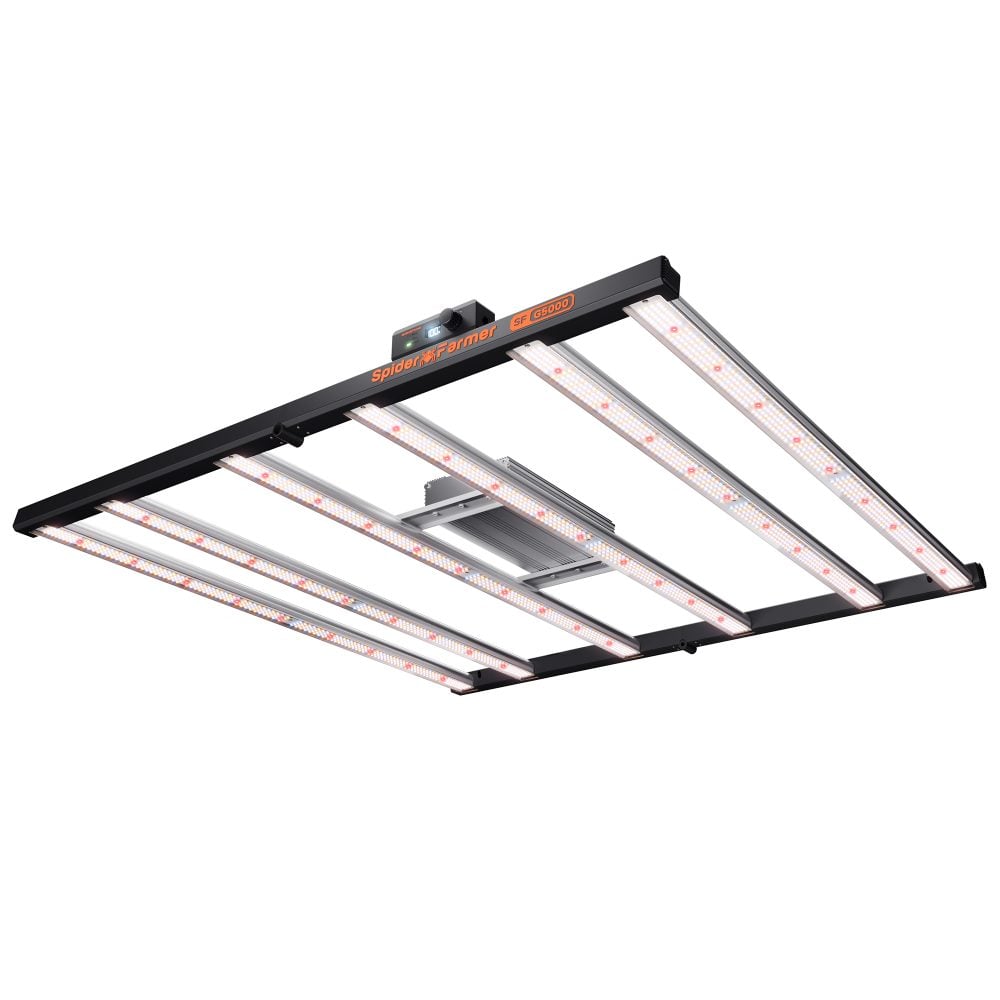
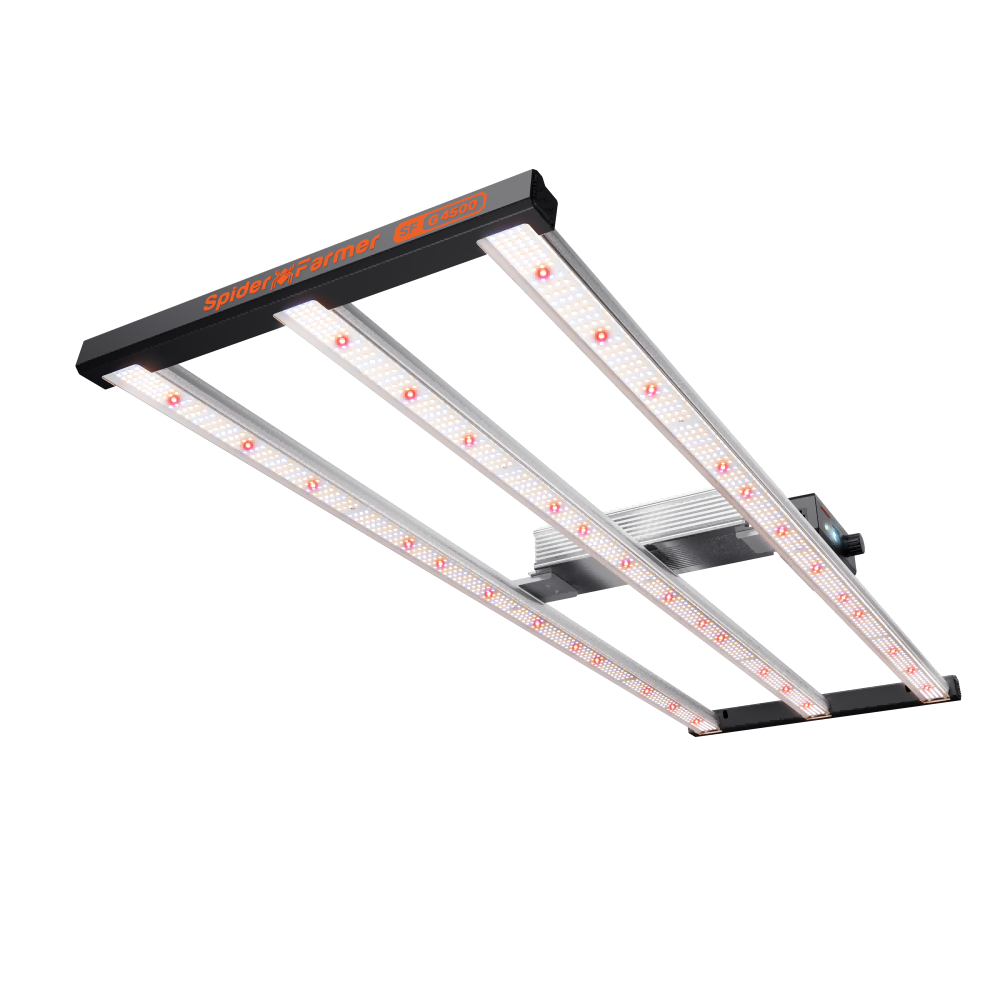
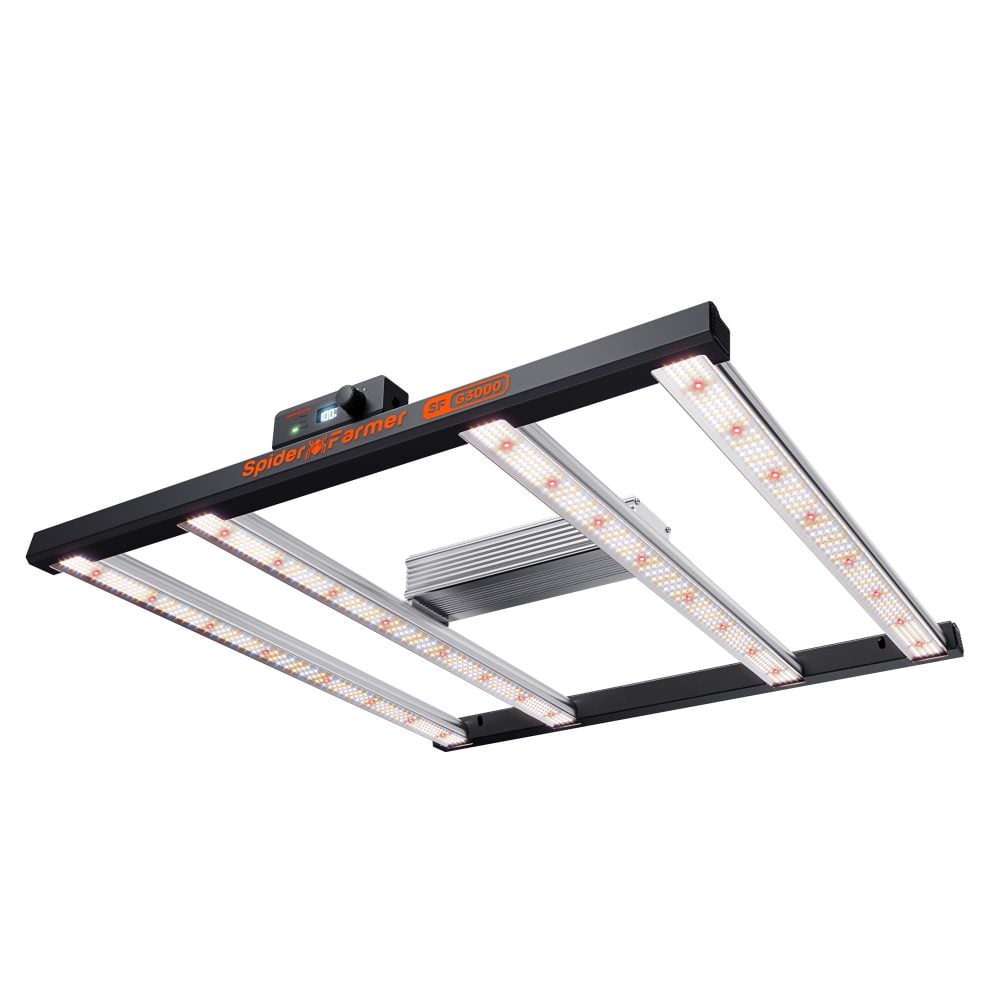
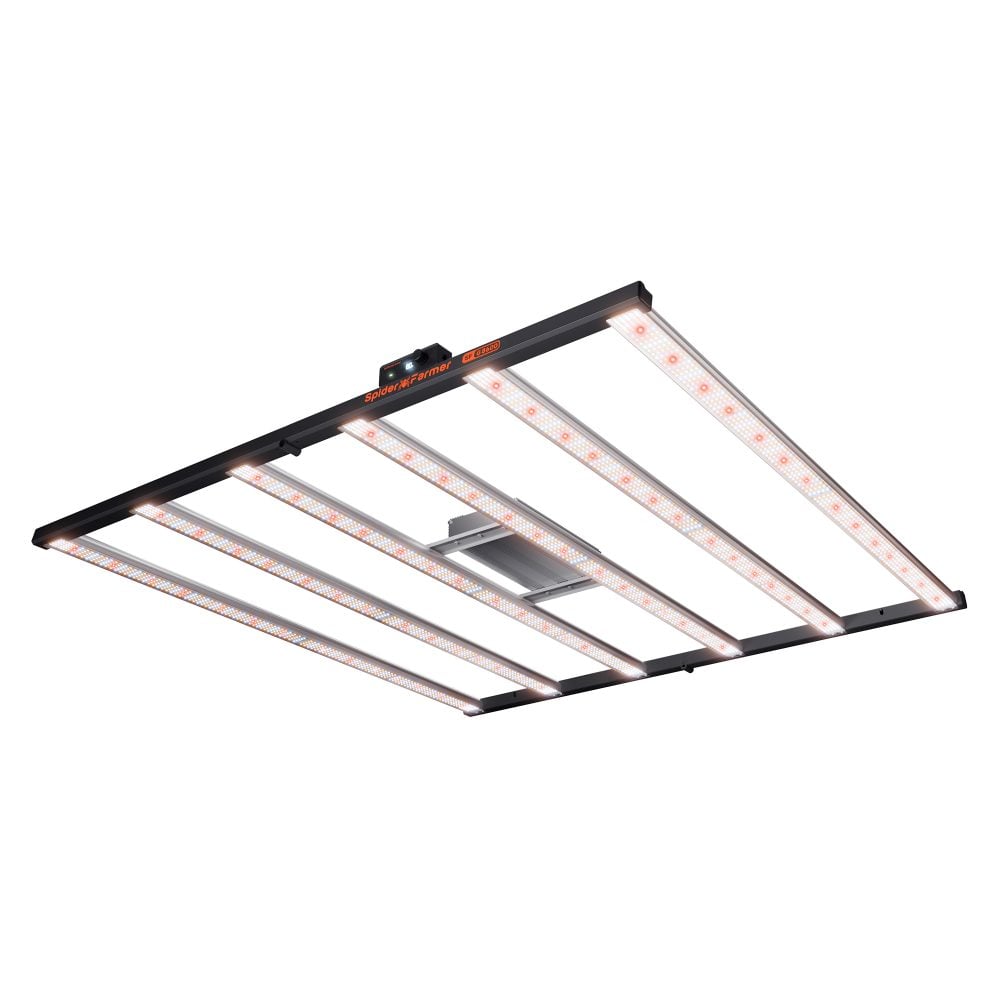
Spider Farmer‘s lighting range includes the SF Series, SE Series, and G Series, each built around full-spectrum LED output. The G Series spans multiple wattages, including the G3000, G4500, G5000, G8600, and G1000W, sized for footprints from roughly 90 x 90cm up to 150 x 150cm. These fixtures use Osram Hyper Red diodes and support WiFi and Bluetooth app control for dimming. The SE Series, described by the brand as its top-tier lighting option, uses upgraded high-density Bridgelux diodes aimed at improved heat dissipation and output.
App-based dimming control is a recurring feature across these lines, letting a fixture’s intensity be adjusted without physically touching the unit. For growers comparing indoor grow lights and systems across brands, this kind of remote dimming and spectrum consistency is one of the more tangible differentiators. The breadth of wattage options also means a single product line can cover propagation-size tents through larger commercial footprints.
Automated Climate Control with the Spider Farmer GGS Genius Grow System
Beyond lighting, Spider Farmer sells the GGS Series, positioned among its promoted product lines alongside the SE Series. Climate hardware in an indoor setup typically manages temperature, humidity, and sometimes CO2, coordinating these factors with the lighting schedule. This is the layer that keeps a tent’s internal environment stable even as external conditions shift through the day.
For growers who already run multiple lights or tents, having climate equipment sit inside the same product ecosystem as the lighting simplifies setup. It markets the GGS line alongside its grow lights, suggesting an intent to let growers source lighting and climate equipment from one supplier rather than piecing together unrelated brands.
Complete Grow Tent Kits: Integrated Solutions for New Indoor Growers
Alongside lighting and climate hardware, Spider Farmer manufactures grow tents, including its recently introduced Master Series, described as engineered for professional indoor growing. The brand has operated a dedicated 2700sqm workshop for grow tent production, in addition to a separate 3800sqm facility for LED grow light manufacturing. That kind of dedicated tent production capacity points to tents being a core category for the brand rather than an accessory line.
A grow tent kit typically bundles the enclosure with ducting, hanging hardware, and sometimes a light and fan, giving a new grower a more complete starting point. Because Spider Farmer sells tents, lights, and ventilation under one storefront, components from its own range are more likely to match in size and mounting style. This matters practically since a tent’s internal dimensions need to accommodate both the light fixture’s footprint and the ducting required for intake and exhaust.
Supplemental Lighting and Accessory Ecosystems in Modern Indoor Grows
Primary lighting is not the only lighting category relevant to an indoor grow. Spider Farmer also sells UV IR deep red bar side lights, marketed as supplemental grow light bars that add UV and IR wavelengths to support stronger growth and flowering stages. These bars are positioned as an addition to a main fixture rather than a replacement for it.
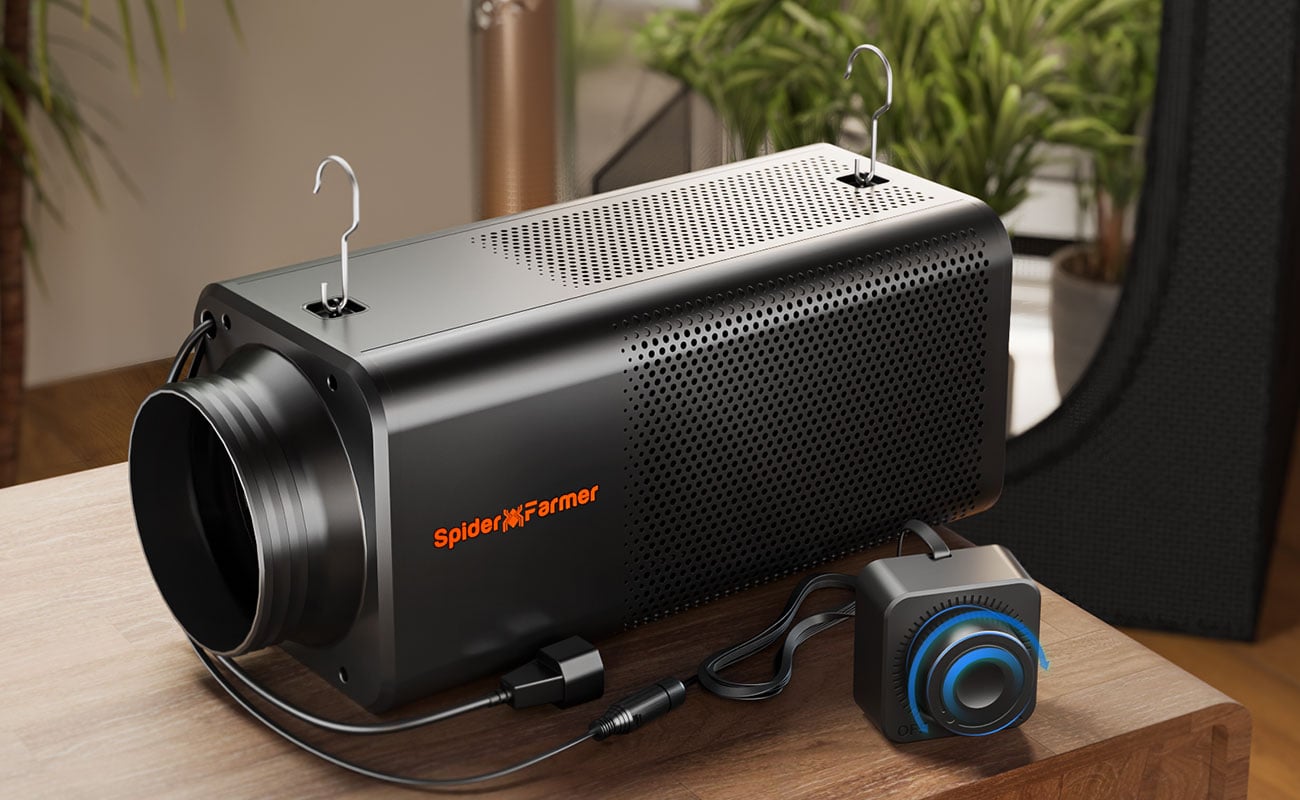
Ventilation accessories round out the accessory ecosystem. The brand recently introduced a 2-in-1 6-inch ventilation system, combining functions that might otherwise require two separate pieces of hardware. Together with carbon filter kits, which the brand also manufactures, these accessories address odour control and airflow, two practical concerns in any enclosed grow space.
- Lighting fixtures supply the spectrum and intensity that drive plant photosynthesis through each growth stage.
- Grow tents create a controlled, light-sealed enclosure that keeps reflective surfaces and airflow contained.
- Climate controllers regulate temperature and humidity so conditions stay stable despite outside weather changes.
- Ventilation and carbon filter kits manage air exchange and odour, preventing stagnant air inside the tent.
- Supplemental light bars add targeted wavelengths, such as UV and IR, during flowering or finishing stages.
Spider Farmer’s Role as a Vertically Integrated Indoor Growing Supplier
Spider Farmer describes itself as a manufacturer rather than a reseller, with its own LED grow light and grow tent production facilities. The company states it has operated for over 16 years in LED grow light manufacturing and maintains overseas warehouses and service centers in the USA, UK, Canada, Australia, and Germany. For Australian customers specifically, the brand ships from an Australian warehouse, with standard delivery estimated at 3 to 7 business days after dispatch and no import duties applied.
That regional warehouse setup also supports a 30-day return and exchange policy, along with order tracking sent once a parcel is scanned by the carrier. A customer service team of more than eleven people handles after-sales support according to the brand’s own about page. For someone assembling indoor grow lights and systems from a single supplier, this combination of manufacturing, regional warehousing, and defined return terms is a practical factor alongside the hardware specifications themselves.
As indoor cultivation technology continues to consolidate lighting, climate, and structural equipment under single suppliers, the value lies less in any one component and more in how cleanly the pieces fit together.