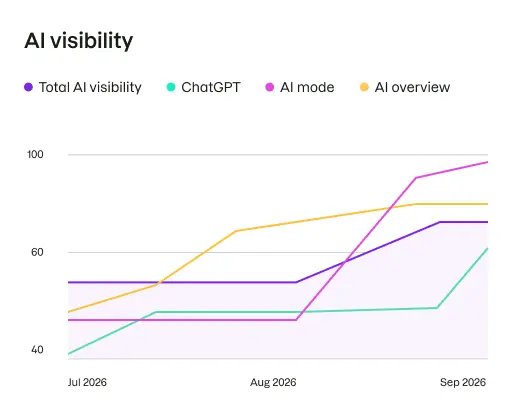
Many brands still treat search rankings and AI answer placement as two separate jobs, run by two separate teams with two separate toolsets. That split is where most SEO and AI visibility mistakes start, because the signals that earn a page a spot in Google often overlap with the signals that get a brand recommended by ChatGPT or Gemini. The sections below walk through the most common misconceptions and show how a unified platform like SEMrush approaches each one.
Misconception: SEO and AI Visibility Are Separate Strategies
A persistent belief holds that optimizing for traditional search and optimizing for AI-powered answer tools require entirely different playbooks. In practice, both depend on authority signals, structured content, and consistent brand mentions across the web. SEMrush positions its platform around this overlap, offering AI Visibility and Prompt Research features alongside its established Keyword Research and Rank Tracking tools. Treating the two as unrelated disciplines often means duplicating effort instead of building on a single foundation.
Myth: Keyword Research Alone Guarantees Search Rankings
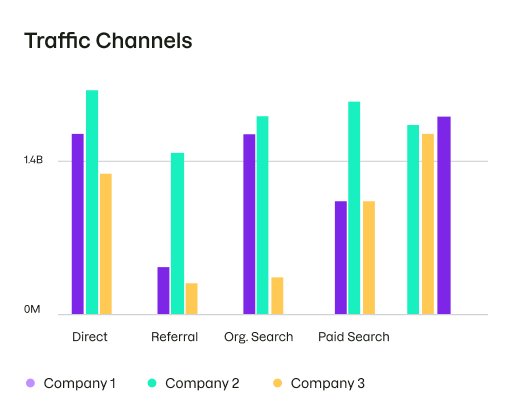
Keyword research remains a starting point, not a finish line. A list of search terms says nothing about competitive gaps, content quality, or how a brand actually gets cited by an AI assistant answering a related question. The Keyword Research tool is built to work alongside Competitor Analysis and Content Creation features, so keyword data feeds directly into decisions about what to publish and how to structure it. Relying on keyword volume alone, without connecting it to market context, is one of the SEO and AI visibility mistakes that quietly wastes budget over time.
The Semrush One Unified Platform: Why Fragmented Tools Fail
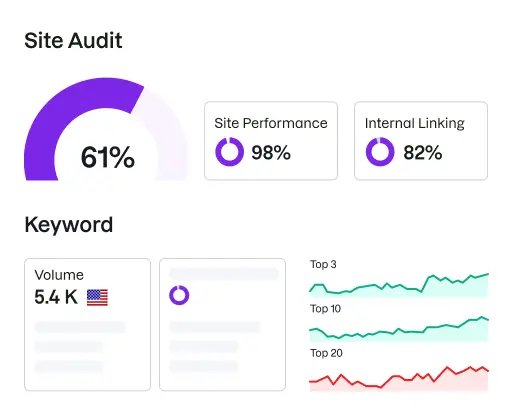
Stitching together separate tools for rank tracking, backlink analysis, and content planning creates gaps where data goes stale or contradicts itself. SEMrush One brings these functions, along with AI Brand Sentiment and Marketing Reports, into a single system, and that matters because visibility now plays out across search pages, social platforms, and AI-generated answers at the same time, so treating any one of these in isolation leaves gaps competitors can fill first. A fragmented toolkit makes it hard to see whether a drop in visibility came from a technical issue, a competitor move, or a shift in how AI tools summarize a topic.
SEMrush also offers Semrush MCP, which connects live SEO, market, and brand visibility data directly into AI assistants. This means strategy questions can be asked against real data rather than guesswork pulled from disconnected spreadsheets. For teams managing visibility across search and AI answers at the same time, that kind of direct data access removes a layer of manual reconciliation.
Common Errors in Competitor Analysis and Market Research

Competitor analysis is frequently reduced to checking who ranks above a given page for a handful of keywords. That narrow view misses broader market shifts, emerging competitors, and changes in how a category is discussed across AI tools. Market Analysis and Competitor Analysis features are built to surface this wider context rather than a single ranking snapshot.
- Assuming a high ranking on one search engine means equal visibility inside AI-generated answers overstates how uniformly those systems pull and present information.
- Focusing only on direct competitors ignores that AI answer tools often cite sources outside a brand’s usual competitive set.
- Treating backlinks as the sole authority signal overlooks how answer engines also weigh brand mentions that carry no link at all.
- Checking rankings once a month, rather than continuously, means visibility shifts inside AI tools can go unnoticed for weeks.
- Assuming local search behavior mirrors national trends leads brands to misjudge demand in specific markets they actually serve.
Technical Site Health Oversights That Damage Visibility
Content and competitive strategy can only perform as well as the technical foundation beneath them. Slow pages, broken internal links, and crawl errors undermine both traditional rankings and the ability of AI crawlers to parse a site accurately. The Technical Site Health feature is designed to catch these issues before they quietly erode visibility across both channels.
Many teams still treat a technical audit as a one-time cleanup rather than an ongoing check. That assumption is another entry on the list of common SEO and AI visibility mistakes, since site structure changes constantly as pages are added, redirected, or retired. Continuous monitoring, rather than periodic review, keeps the technical base aligned with what both search engines and AI tools expect to find.
Getting AI Visibility Right: Beyond Basic SEO
Earning a mention inside an AI-generated answer depends on more than ranking well in classic search results. It depends on how clearly a brand’s content answers specific questions and how consistently that brand is referenced across the web. The AI Visibility Checker and Prompt Research tools focus specifically on this layer, looking at how brands appear within AI-generated responses rather than only within a results page.
Digital PR also plays a role here, since off-site mentions help establish the kind of broad authority that AI systems draw on when forming an answer. SEMrush includes Digital PR among its content and authority-building features for this reason. Addressing AI visibility as a distinct but connected layer, rather than an afterthought bolted onto SEO, helps avoid the visibility mistakes outlined above.
Fixing these SEO and AI visibility mistakes starts with seeing search and AI answers as one connected field, not two.