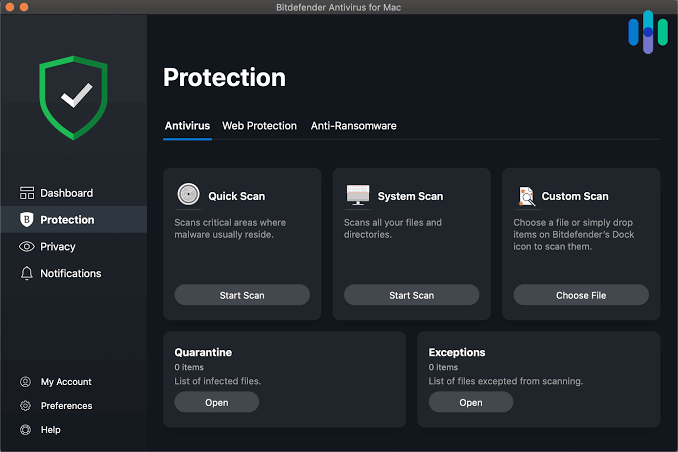
Many organizations assume that deploying one endpoint agent closes the book on protection, and that assumption sits behind some of the most persistent enterprise cybersecurity mistakes. Attackers now combine network intrusion, fileless techniques, and credential theft in a single campaign, so a narrow tool rarely sees the whole picture. This article looks at what modern platforms, including Bitdefender‘s GravityZone line, actually cover, and where perceived protection and real protection tend to diverge.
Misconception: One Antivirus Agent Is Enough for Complex Threats
A common belief is that a single antivirus agent handles every stage of an attack, from the first malicious file to lateral movement across a network. In practice, many enterprise cybersecurity mistakes stem from treating signature-based detection as a complete strategy. Modern attacks often bypass traditional scanning entirely, using legitimate system tools instead of dropping obvious malware.
Bitdefender addresses this gap by building its business offerings around prevention, detection, and response as connected stages rather than isolated features. That structure matters because a single missed stage can let an attacker sit undetected for an extended period. Treating endpoint protection as a lifecycle, not a one-time scan, is a first step away from this misconception.
GravityZone Business Security Premium: Beyond Basic Malware Detection
GravityZone platforms extend past simple malware blocking into layered prevention that is meant to reduce the number of incidents a security team has to chase manually. The design looks for suspicious behavior patterns, not only known malicious signatures, which matters for threats that constantly change their code to dodge recognition. That shift in focus, from files to behavior, is one of the clearer dividing lines between basic antivirus and a broader security platform.
Because threats increasingly rely on legitimate processes to avoid raising alarms, detection has to look at behavior across an entire session rather than a single file. A unified agent is also intended to simplify deployment for IT teams managing many endpoints at once. The overall aim is a platform that does not depend on any single detection method working alone.
Ransomware and Fileless Attacks: What GravityZone Small Business Security Blocks
Ransomware remains one of the most cited enterprise cybersecurity mistakes in incident reports, often because organizations believe backups alone are sufficient protection. Fileless attacks compound the problem since they operate in memory and avoid leaving traditional traces on disk. GravityZone Small Business Security is built to address both categories by combining behavioral monitoring with protections that do not depend solely on scanning stored files.
This approach matters for smaller security teams that cannot staff a full around-the-clock monitoring function. Automated prevention reduces the volume of alerts that would otherwise need manual triage. For organizations without dedicated security analysts, that reduction in manual workload often marks the difference between catching an incident early and discovering it after damage has spread.
The Endpoint Isolation Myth: Why Visibility Matters More Than Reaction Time

A persistent myth holds that isolating a single infected endpoint quickly is enough to stop an attack in its tracks. However, modern intrusions frequently move across multiple systems before any single endpoint shows obvious signs of compromise. Reacting fast to one machine does little good if the broader network activity remains invisible to the security team.
This is why organization-wide visibility, not just fast endpoint response, sits at the center of reducing enterprise cybersecurity mistakes. Bitdefender‘s enterprise platform is designed to visualize incidents at an organizational level rather than endpoint by endpoint. That broader view lets teams see how an incident spreads, not only where it started.
Extended Detection Across Networks: GravityZone Defense XDR vs. Fragmented Tools
Fragmented security stacks, where email filtering, network monitoring, and endpoint protection all run as separate unconnected tools, create blind spots between systems. An alert from one tool rarely correlates automatically with activity seen by another, which slows down investigation. Extended detection is built to connect signals across endpoints and networks rather than leaving each tool to operate in isolation.
Consolidating these signals into a single view supports faster investigation because analysts are not manually cross-referencing separate consoles. In addition, extended detection reduces the chance that a slow-moving attack across multiple systems goes unnoticed. This is one of the clearer examples of where perceived coverage and actual coverage diverge for organizations relying on fragmented tooling.
How Modern Incident Response Differs from Traditional Endpoint Security
Traditional endpoint security often stopped at detection, leaving investigation and remediation work entirely to human analysts working across disconnected logs. Modern incident response, by contrast, is built around speeding up the stages that follow an alert. GravityZone includes one-click response options intended to let teams of varying experience levels contain spreading threats, regardless of team size or seniority.
Bitdefender pairs prevention-first security functions with incident visualization at the organizational level, an approach that has been recognized in independent testing. The emphasis sits on stopping an attack early rather than cleaning up after the fact. That shift also tends to reduce operational load since fewer incidents escalate into full investigations.
- Many assume one antivirus product covers every attack stage, when prevention, detection, and response actually require coordinated, connected tools.
- Ransomware protection is often equated with backups alone, overlooking behavioral detection designed to stop encryption before it starts.
- Fileless attacks are frequently underestimated because they leave no file to scan, which is why behavior-based monitoring matters.
- Fast isolation of a single endpoint is sometimes mistaken for full containment, even though lateral movement can continue elsewhere on the network.
- Fragmented security tools can create a false sense of comprehensive coverage, when gaps between disconnected systems often hide ongoing incidents.
- Traditional endpoint security is sometimes assumed to include full incident response, though many legacy tools stop at detection alone.
These gaps explain why enterprise cybersecurity mistakes persist even in organizations that already run some form of endpoint protection.