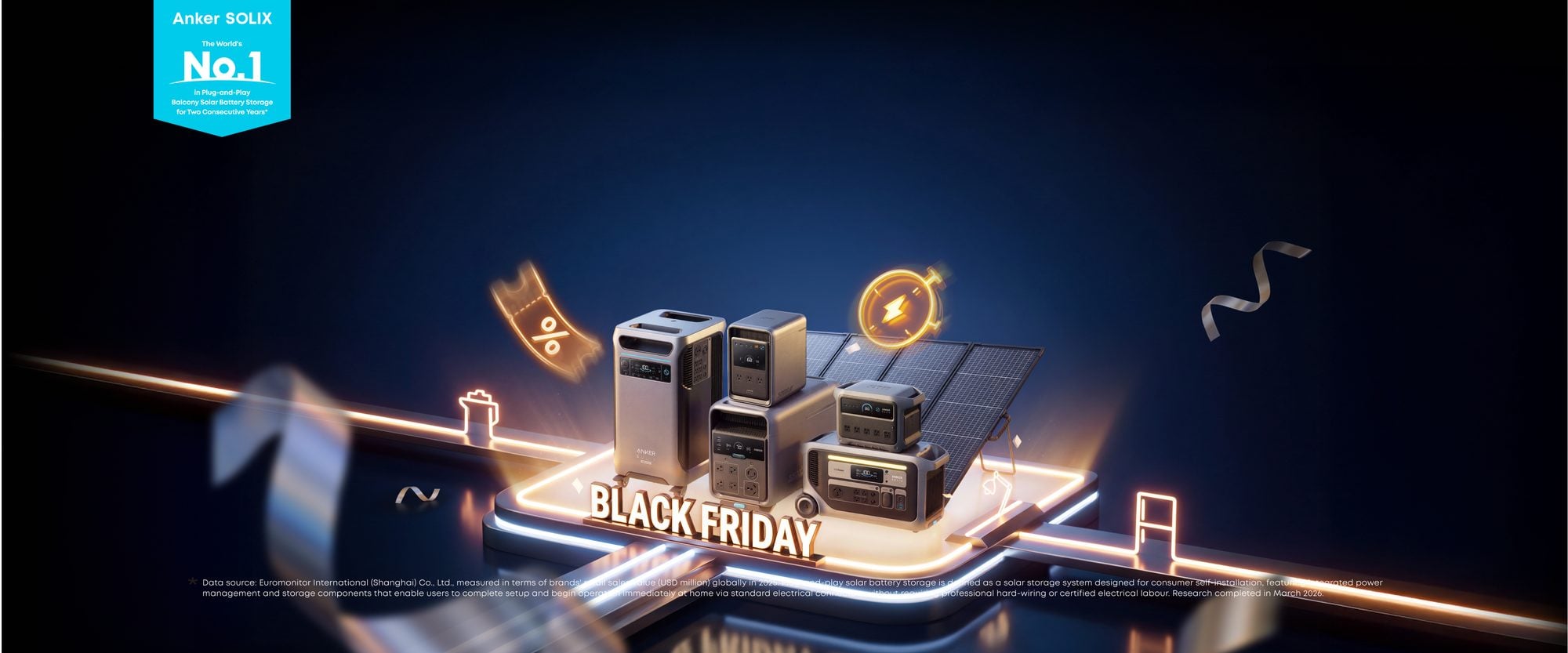
When the grid fails, keeping a refrigerator running or a few lights on becomes the priority. A portable power station home backup setup can keep essential appliances alive for a few hours or stretch that support across several days, letting a household decide which circuits matter most as an outage drags on. Ankersolix builds a range of these units aimed at different scales of need, from single appliances to broader household coverage.
Inside a Portable Power Station Home Backup Setup
A portable power station stores energy in a built-in battery and releases it through standard outlets, USB ports, and sometimes car-style sockets. During an outage, appliances plug directly into the unit instead of a wall socket. This makes a portable power station home backup solution attractive because it requires no electrician visit and can be moved between rooms as needs shift.Ankersolix positions its lineup around this exact use case, describing itself as a source for renewable energy equipment including portable power stations, solar generators, and panels. The company states it has sold over 200 million products worldwide and operates in 146 countries, with a decade of experience in charging technology behind its current catalogue.
Anker SOLIX S2000 for Extended Refrigerator and Essential Device Backup
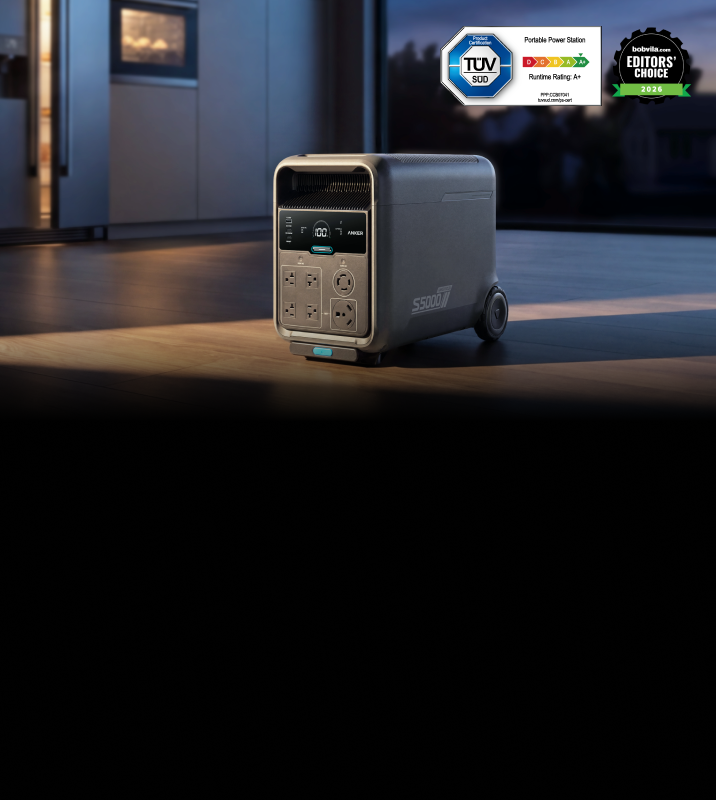
The ankersolix S2000 is positioned as the longest-lasting 2kWh portable power station in the catalogue. On the US site, the product is tied to up to 35 hours of fridge backup, while the EU storefront lists it at up to 24 hours of home backup. Either figure points to a unit built around keeping a refrigerator running well past a short outage. Because refrigeration draws power intermittently rather than continuously, a 2kWh capacity can stretch across a long run of hours without constant draw. This makes the S2000 a fit for households mainly concerned with food safety and a handful of small devices during a power interruption, rather than running larger appliances at the same time.
Anker SOLIX F3000 for Lights and Essential Gadgets During Outages
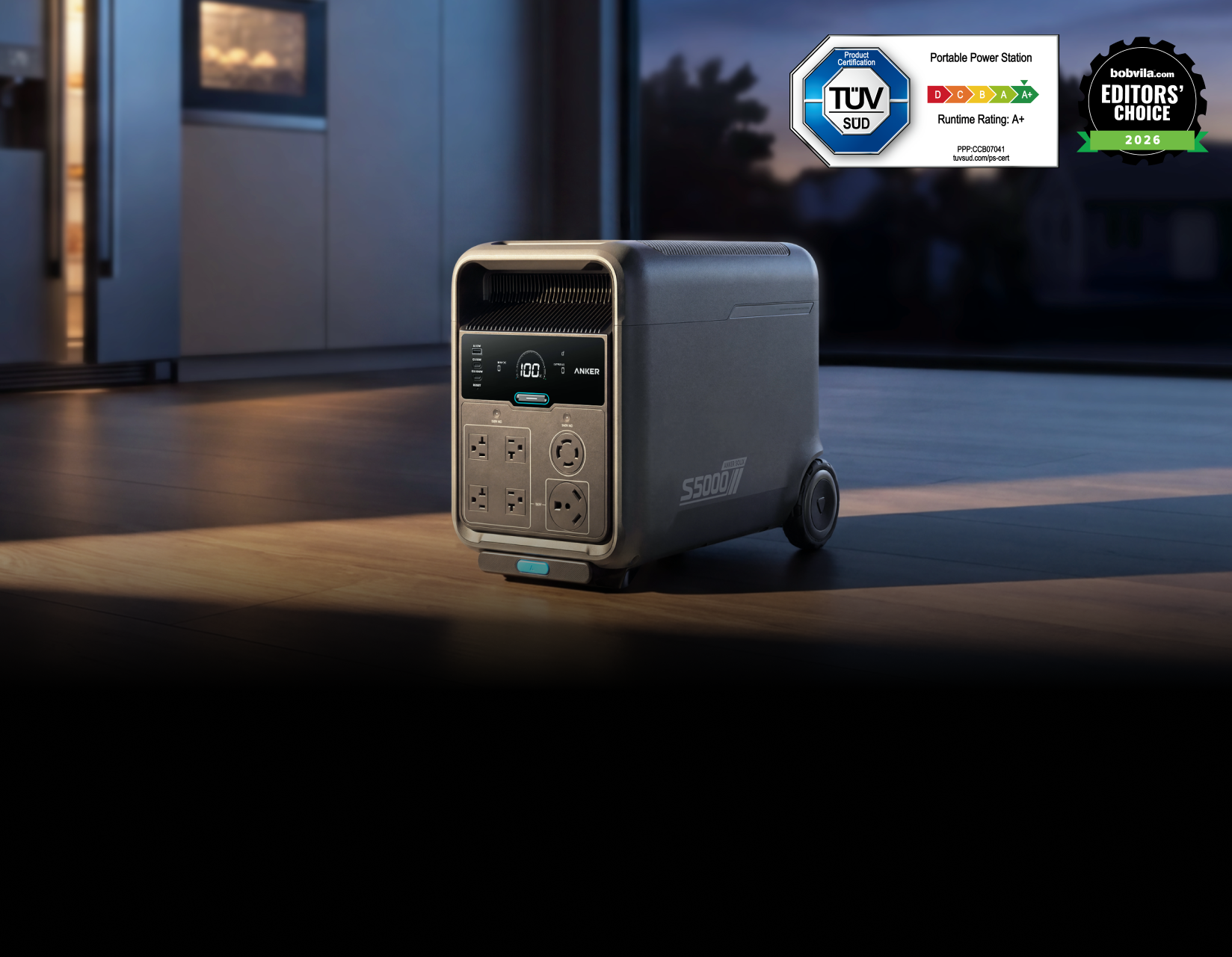
The F3000 is marketed by Ankersolix as the longest-lasting essential home backup unit in the lineup, with messaging built around keeping lights and gadgets on through a storm. It sits above the S2000 in the product family listed on the camping collection page, which groups it among stations rated for output over 3000W and capacity over 3kWh. This places the F3000 in a category meant for slightly broader coverage than the S2000, extending beyond a single appliance toward a mix of lighting, charging, and small electronics. The brand’s own collection filters also group the F3000 alongside the F3800 and F3800 Plus under the higher output and capacity brackets, suggesting a shared design focus on sustained backup rather than brief device charging.
Anker SOLIX S5000 for Whole-Home Power Over Multiple Days
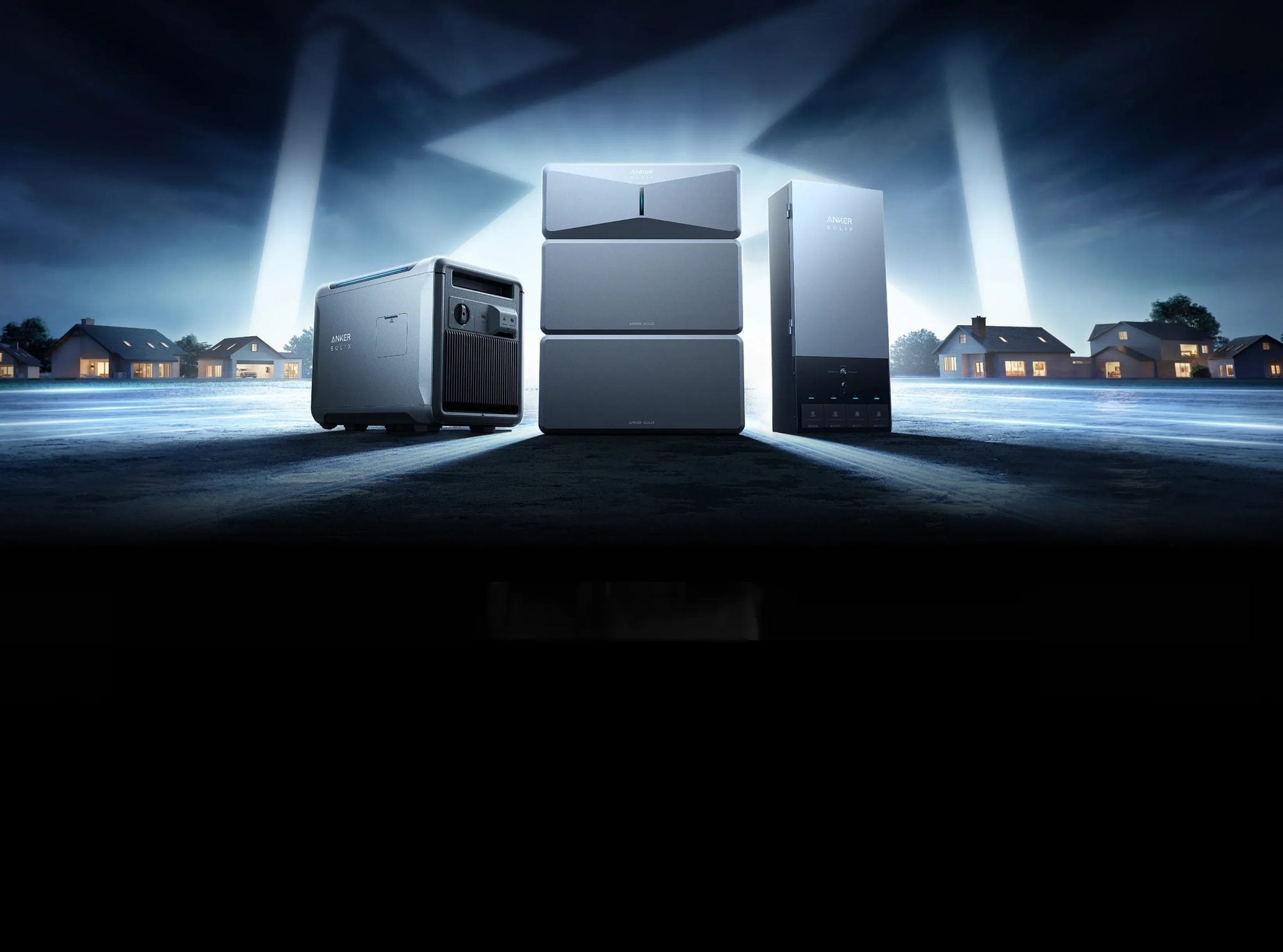
At the upper end, the S5000 carries a 5kWh capacity and Ankersolix messaging that states it can power a home for 48 hours. That multi-day framing separates it from the S2000 and F3000, both of which are described in terms of single appliances or essential devices rather than a full household load. A 5kWh capacity gives the S5000 enough headroom to support a wider mix of circuits at once, which is why the marketing around it leans on whole-home language rather than single-appliance language. This scale generally suits situations where an outage is expected to run long or where several rooms need power simultaneously rather than a single refrigerator or a few lamps.
Pairing Portable Power Stations with Solar Panels for Renewable Backup
Ankersolix also sells solar panels and solar generators alongside its power stations, and several of its portable units are listed as compatible with panel add-ons. The EU catalogue, for example, lists the C2000 Gen 2 bundled with bifacial solar panels in single and double configurations, showing that panel pairing is an established option within the range rather than an afterthought. Combining a power station with solar panels gives a household a way to recharge the unit without relying on the grid at all, which matters during an extended outage when grid power is unavailable for days rather than hours. This renewable pairing sits alongside standalone solar generators and rigid or portable panel options within the broader catalogue.
Runtime Expectations Across Different Appliance Types
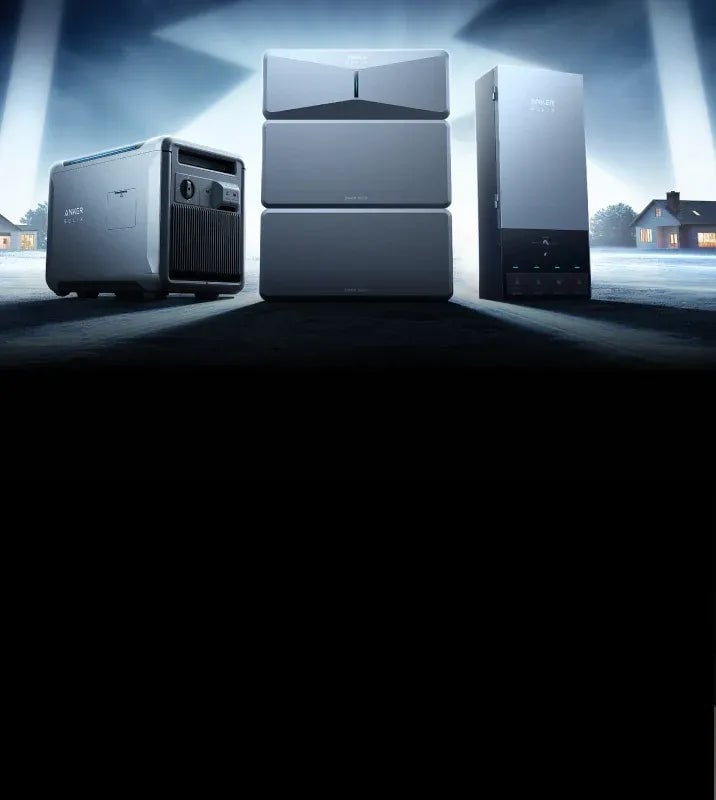
Runtime depends heavily on what is plugged in. A refrigerator cycles on and off, so a station rated for a given number of fridge-backup hours will behave differently than one running a continuous load like a sump pump or a space heater. This is why specific runtime figures get attached to specific appliances rather than one blanket number across the whole range. Matching the right unit to the right appliance mix is central to getting useful runtime out of a portable power station home backup setup. A household leaning on a few lights and a phone charger will see very different results than one trying to keep a refrigerator, a modem, and a sump pump running together.
- A refrigerator can draw backup power for up to 35 hours on the S2000 according to the US listing, or up to 24 hours per the EU listing.
- Lighting circuits and small gadgets are the stated focus of the F3000, built for keeping essentials on through storm-driven outages.
- Broader home loads, including multiple appliances running together, fall under the scope of the S5000, which can reportedly power a home for 48 hours.
- Phones, laptops, and other small electronics can be charged through USB and AC outputs on any of the stations in the range.
- Solar panels can recharge compatible stations during daylight hours, extending backup capability when an outage runs longer than the battery alone can cover.
Outages rarely announce their length in advance, which is part of why portable power station home backup equipment gets sized around ranges of hours rather than a single fixed number. That range of options is what lets a household weigh a refrigerator against a few lamps or a wider mix of circuits.