Experienced buyers tend to notice form before colour. That instinct is useful when looking at Saints, a London florist whose named arrangements favour sculptural lines over loose, generic bunches. Across the range, modern floral arrangements are built around silhouette, contrast, and seasonal stems rather than volume alone, and that same logic carries through hand-tied bouquets, bridal pieces, and the Festive collection alike.
Understanding Sculptural Silhouette in Saints Arrangements
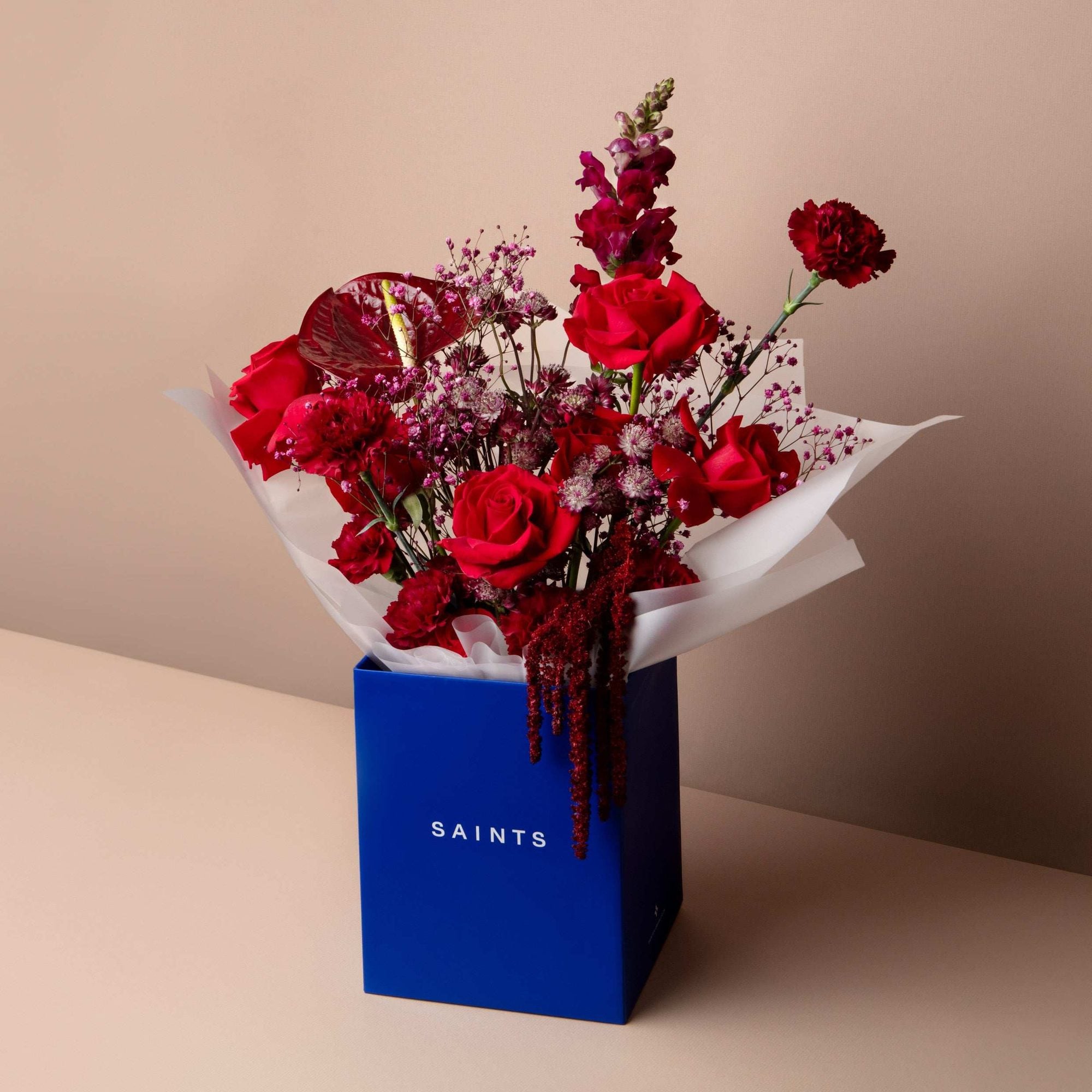
Saints describes several of its pieces as sculptural, and the product details back that up. Rue is built from velvety red roses, striking anthuriums, rich crimson carnations, and cascading amaranthus, which together create a dramatic, almost architectural outline rather than a rounded posy shape. Rebel pushes this further, featuring vivid green cymbidium orchids with curling stems and what the brand calls unexpected asymmetry. These are not incidental details, since they describe a deliberate approach to shape that separates the named arrangements from a standard mixed bouquet.
Colour Palette Strategy Across the Collection
Colour is treated as a structural tool rather than decoration. Angelique is composed in rich crimson, berry, and pink tones, described as celebrating contrast with warmth and confidence. Seraphine takes the opposite temperature, layering soft lilacs and deep violet tones and finishing with silver anthurium accents for a cooler, more celestial effect. Solis sits between the two, pairing apricot roses with blush celosia and mauve delphinium to balance warmth against cool winter air. This range of palettes shows that Saints does not rely on a single signature colour story but instead varies temperature deliberately across different named pieces.
Textural Contrast and Supporting Blooms
Beyond colour, texture plays a defined role in how each arrangement reads. Faerie combines soft coral reflexed roses with sculptural anthuriums, playful alliums, and airy delphiniums, mixing dense and feathery forms in one composition. Cruz leans into an earthier texture, pairing Cappuccino roses and terracotta carnations with blue hydrangea and wild flowers for what the brand describes as a muted, organic silhouette. Lucia pairs premium pink roses with layered seasonal greenery and supporting blooms to build depth and dimension rather than flatness. These supporting stems keep the modern floral arrangements from reading as one-note, since the dominant bloom is always offset by something textural underneath it.
Seasonal Availability and Year-Round Rotation
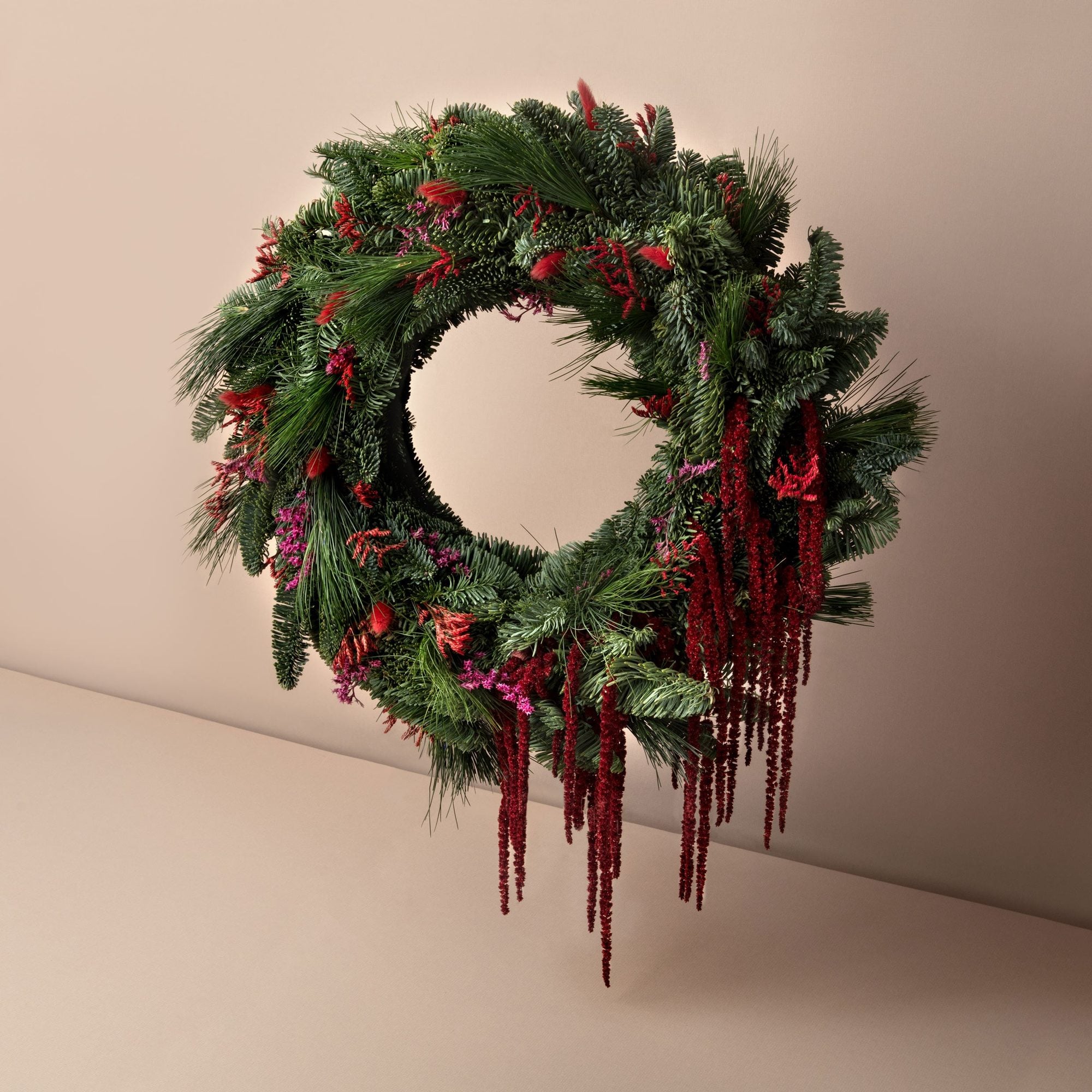
Saints states plainly that its stems are seasonal and responsibly sourced, and the collection structure reflects that. The Festive range is described as florals designed for modern gatherings, curated as a seasonal selection that is minimal and tactile. The Sun Posy, by contrast, is framed as a spring arrangement built around warmth, light, and renewal, using yellow roses, delphinium, thistle, and achillea. The hand-tied bouquet collection alone runs to eleven separate products, which suggests a rotating but structured seasonal offer rather than a single static catalogue. This rotation means the specific flower choices behind any one named arrangement can shift, even where the name and overall colour direction stay recognisable.
Faerie, Rue, and Seraphine: Signature Design Approaches
Three pieces in particular illustrate how differently this florist approaches its named arrangements. Faerie is described as inspired by the quiet magic of nature, light in presence yet expressive, built from coral, anthurium, allium, and delphinium. Rue takes a bolder, more confident route, described as a dramatic expression of modern love with unmistakable presence through deep red tones. Seraphine, meanwhile, is pitched as ethereal and quietly dramatic, built on tonal purple depth finished with a metallic-toned anthurium accent. Set side by side, these three pieces show a consistent design vocabulary of sculptural form and considered contrast, even as the emotional register shifts from playful to bold to quietly dramatic.
Named Arrangements as Design Consistency
What ties the collection together is not a single flower or colour but a repeated design logic. Each piece pairs one or two dominant sculptural blooms, such as anthurium or reflexed rose, with a supporting cast chosen for texture or seasonal character. Honoré, for example, is described as joyful and full of character, built on sun-washed yellow craspedia layered with pink and apricot roses in citrus tones. That naming convention, paired with consistent design language across the Saints site, gives buyers a way to anticipate what a new arrangement will look like before ever opening a product page.
- Rue relies on a dramatic, sculptural silhouette built from red roses, anthuriums, and carnations with cascading amaranthus.
- Faerie favours a lighter, airy structure dominated by coral reflexed roses and sculptural anthuriums.
- Seraphine is built around cool violet and lilac tones finished with a silver-toned anthurium accent.
- Cruz uses a warmer, earthy colour temperature anchored by Cappuccino roses and terracotta carnations.
- Angelique leans into a warm crimson and berry palette designed around bold colour contrast.
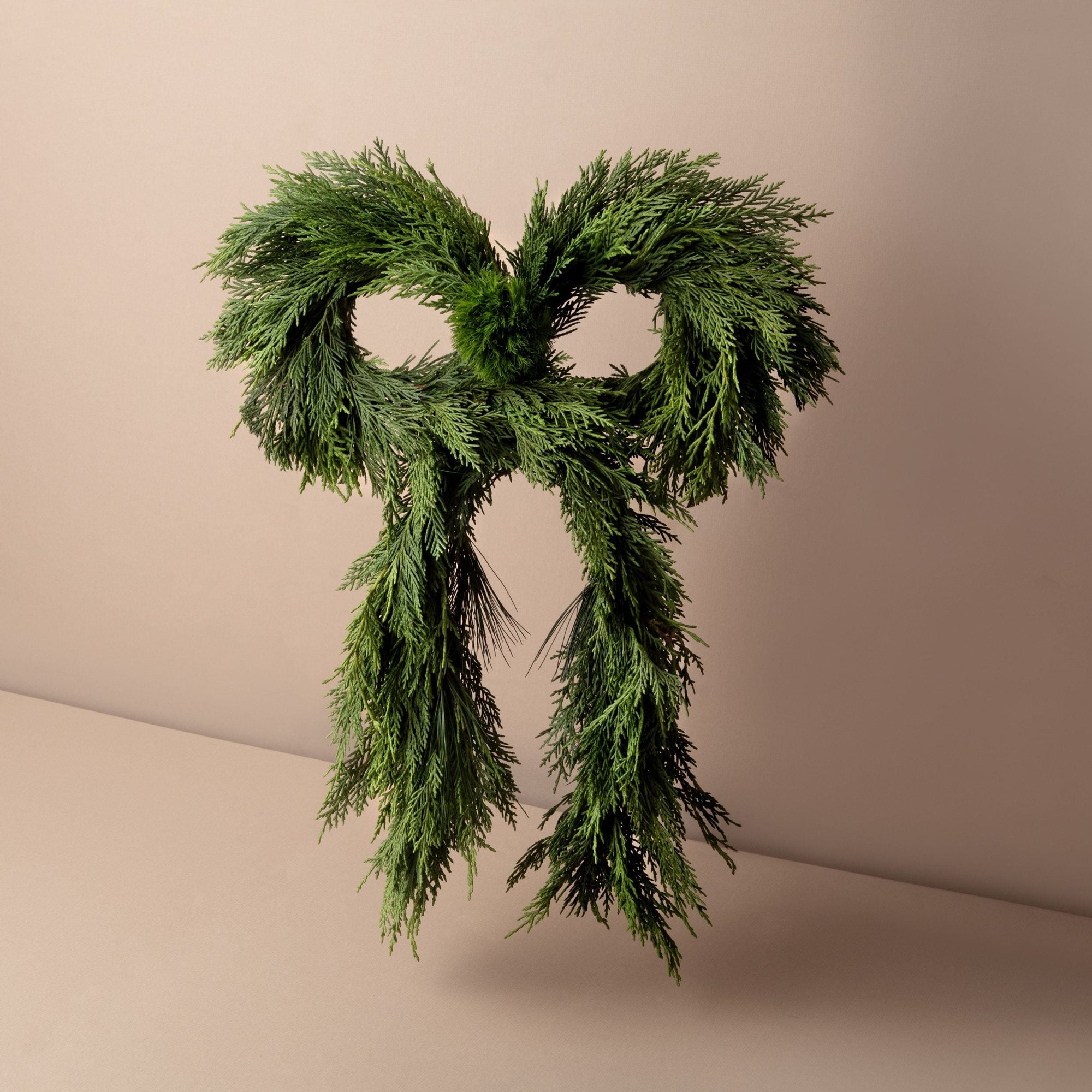
Saints also extends this same considered approach beyond fresh stems, with items like the Evergreen Bow Wreath and the Mojave Desert Candle sharing the same restrained, intentional design language. For buyers comparing modern floral arrangements across different florists, that legible mix of defined silhouette, deliberate colour temperature, and seasonal rotation is what separates a named collection from a loose assortment of unrelated bouquets.
Taken together, the collection reads less like a catalogue and more like a set of recurring design studies in form and colour.