Choosing between insulated jackets vs fleeces often comes down to what a given day outdoors actually demands, and the balance can flip entirely once the season turns. Blacks carries both categories alongside midlayers, and the range makes clear that each piece solves a different problem rather than competing for the same job. Understanding how down, synthetic fill, and fleece fabric behave helps explain why a layering system works better than a single heavy coat.
Insulated Jackets: Down and Synthetic Construction
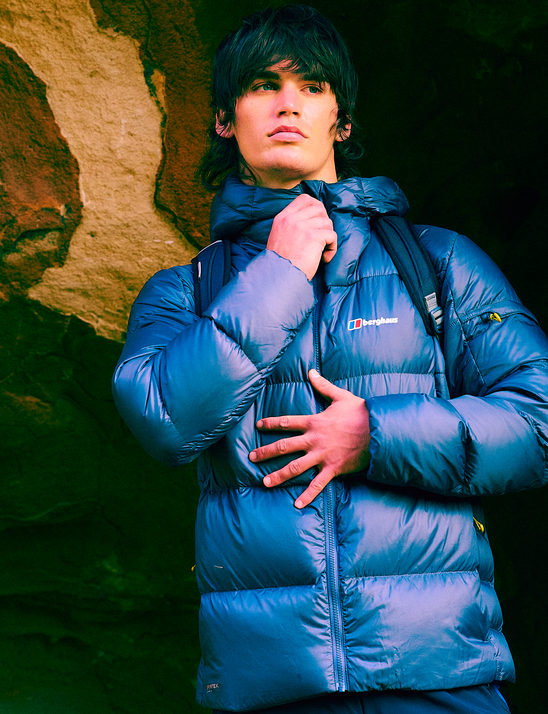
Blacks lists insulated jackets as their own dedicated category, separate from fleeces and midlayers in the site’s navigation. Within that category sit pieces such as the Montane Men’s Apex 900 Hooded Down Jacket and the Berghaus Women’s Gravix Insulated Jacket, which represent the two main construction routes, down fill and synthetic fill. Down jackets trap warm air using natural insulation, while synthetic jackets use man-made fibres designed to perform a similar job. Both approaches sit under the same category label, but the materials behind them differ considerably.
The Montane piece uses a hooded down construction, which typically suits colder, drier conditions where loft and compressibility matter most. The Berghaus Gravix, described simply as an insulated jacket, fills a similar outer-layer role without being tied to a single fill type in the listing. Together these two products show that the insulated jacket range spans more than one technical approach rather than offering a single style.
Fleeces and Midlayers in the Blacks Range
Fleeces and Midlayers appear as a distinct section on Blacks, sitting apart from the insulated jacket listings. Products such as the Berghaus Men’s Helvellyn Half Zip Fleece and the Columbia Women’s West Bend 1/4 Zip II fall into this group. Both are zip-front fleece pieces, built for wearing under a shell or over a base layer rather than as a standalone outer layer in harsh weather.
The Helvellyn fleece comes in multiple colourways, including black, grey, and blue, and spans a full size run from S to XXL. The Columbia piece is offered from XS through to XL. Having that range of sizes available across both items suggests fleeces are treated as a core, frequently stocked part of the midlayer offering rather than a niche add-on.
Building a Three-Layer System for Variable Conditions

A layering system generally combines a base layer, a midlayer, and an outer layer, each handling a separate task. Beyond insulated jackets and fleeces, the same site also separates out hiking footwear and accessories such as gloves and beanies, which points to a broader habit of grouping gear by its specific function rather than by general warmth. That kind of separation makes it easier to identify which piece is doing which job when building out a full kit.
In practical terms, a fleece or midlayer typically sits closer to the body, while an insulated jacket is worn as the heavier outer piece in colder conditions. The Fjallraven Men’s Skogsö Jacket, listed outside the strict insulated jacket category, shows how outer layers can also take a more casual, everyday form. This flexibility means a layering approach is not locked to a single style of jacket.
Insulation Technology: What Separates Jacket Categories

The core distinction in the insulated jackets vs fleeces comparison comes down to how each product retains heat. Down and synthetic insulated jackets are built around a fill sandwiched between fabric layers, designed to trap air directly. Fleece fabric, by contrast, relies on its brushed or knitted structure rather than a separate fill material.
This is why the two categories are marketed separately on Blacks rather than grouped together. An insulated jacket such as the Montane Apex 900 is positioned as a standalone cold-weather piece, while a fleece like the Helvellyn Half Zip is framed as a midlayer. The naming and categorisation on the site reflect this functional difference rather than treating all warm clothing as interchangeable.
Seasonal Transitions and Layer Combination Strategies

Blacks keeps insulated jackets in their own section year-round, which gives a consistent reference point when conditions swing between mild and cold spells. A half-zip fleece, such as the Berghaus Helvellyn, can work as a standalone layer in milder weather or as part of a combination in colder spells. An insulated jacket such as the Gravix tends to come into play once temperatures drop further or when an outer layer needs to handle more exposure.
The product pages themselves do not describe a fixed seasonal formula, but the split between fleeces vs insulated jackets still points to this kind of flexible use. Shoppers browsing fleeces and midlayers alongside insulated jackets can effectively mix pieces depending on conditions. That structure is part of why the two sections exist separately in the first place.
Material Performance in Real Outdoor Conditions
Material choice affects how a jacket or fleece behaves once it is actually being worn outside. Down fill, synthetic fill, and fleece fabric each bring a different balance of warmth, weight, and bulk, and the following points outline some of the main distinctions found across these categories.
- Down-insulated jackets, such as the Montane Apex 900, use natural fill designed to compress for storage and travel.
- Synthetic insulated jackets, such as the Berghaus Gravix, use man-made fill as an alternative construction method to down.
- Fleece midlayers, such as the Berghaus Helvellyn and Columbia West Bend, are built as zip-front pieces intended for wear under or over other layers.
- Fleece pieces in the range are offered across broad size runs, with the Helvellyn spanning S to XXL and the West Bend spanning XS to XL.
- Insulated jackets and fleeces are listed as separate categories, reflecting their different roles within a layering system.
Taken together, these differences show why neither category fully replaces the other. A fleece on its own may not match the warmth of a down or synthetic jacket in harsher conditions, while an insulated jacket can be more than needed as a single everyday midlayer. The insulated jackets vs fleeces decision, in practice, often turns into a question of which layer, or combination of layers, suits the task at hand.
The Blacks catalogue, spanning named lines from Montane, Berghaus, Columbia, and Fjallraven, gives a concrete sense of how these categories sit alongside each other in a working wardrobe. Rather than favouring one type of warmth over another, the range keeps insulated jackets, fleeces, and midlayers as distinct, clearly labelled options.
Seen this way, the choice between a fleece and an insulated jacket is less about picking a winner and more about matching layer to moment.