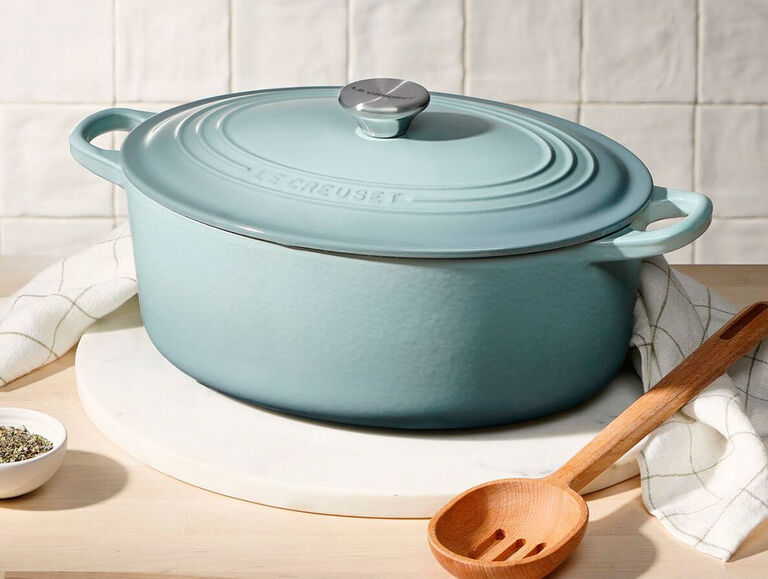
Enameled cast iron cookware occupies a distinct corner of the kitchen aisle, sitting between rustic cast iron skillets and sleek stainless steel sets. It combines a dense metal core with a glass-like coating, giving cooks a pot that browns, braises, and bakes with equal ease. Le Creuset has built much of its identity around this category, and its approach offers a useful lens for understanding what the material actually does.
What Enameled Cast Iron Cookware Is and Why It Matters
At its core, cookware starts with a cast iron body, which is then fused with a layer of enamel. That coating changes how the pot behaves in daily use, since it removes the need for the seasoning rituals associated with bare cast iron. As a result, the cookware can move from stovetop to oven to table without the surface reacting to acidic sauces or tomato-based dishes.
This matters because cooks increasingly want pieces that handle several roles at once. A single Dutch oven can sear, braise, simmer, and serve, which reduces the number of separate pots needed for a single meal. Because the enamel layer also carries color, the cookware doubles as a visible part of table presentation rather than staying hidden in a cupboard.
The Enamel on Steel vs. Traditional Cast Iron: Understanding Material Choices
Not all enameled cookware shares the same base metal, and this is where the category starts to branch. Traditional cast iron, coated in enamel, is heavier and retains heat for extended cooking tasks like braises and stews. Enamel on steel, by contrast, uses a lighter steel core, which makes stockpots and taller vessels easier to lift when filled.
Le Creuset offers both approaches rather than treating one as a universal answer. Its enamel on steel stockpots are built for high-volume tasks such as stocks, pasta, and soups, where a lighter frame is practical. Meanwhile, its cast iron range leans into the heft that suits slow-cooked dishes, braises, and oven roasting.
Le Creuset’s Signature Dutch Ovens and Roasters: The Brand’s Core Products
The Dutch oven sits at the center of Le Creuset‘s identity, and the lineup includes several shapes built around that same basic form. The Traditional Oval Dutch Oven, the Signature Round Wide Oven, and the Signature Round Deep Oven each adapt the same enameled cast iron principle to a different cooking task. A Signature Oval Baker rounds out the group, suited to dishes that need a shallower profile.
Roasters extend the same idea into larger-format cooking. The 5.25 qt. Signature Roaster is sized for larger cuts of meat or poultry, reflecting how the range scales its cast iron pieces by volume rather than offering a single fixed size. Together, these pieces show how one material family can be shaped into very different kitchen tools.
Beyond Dutch Ovens: Tri-Ply Stainless Steel and Non-Stick Ceramic Options
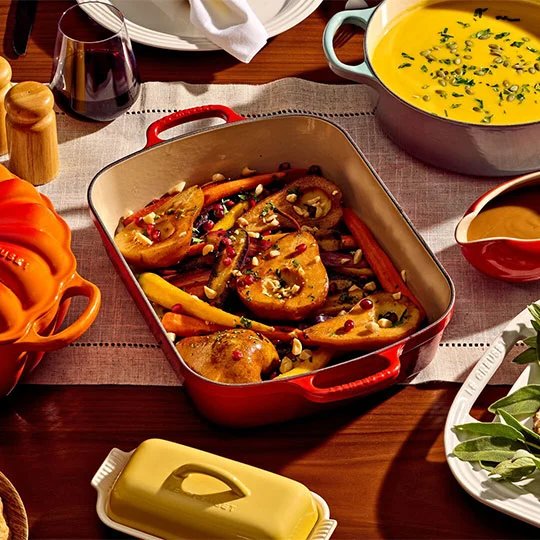
The range extends well past enameled cast iron cookware into other construction types entirely. The Tri-Ply Stainless Steel range targets cooks who want a metal surface suited to searing and sauce work without an enamel coating. Alongside that sits Essential Non-stick Ceramic, aimed at easier food release for eggs, fish, and delicate items.
Toughened Non-stick PRO also appears within the catalog as another non-stick construction option. Having these parallel ranges means the brand is not positioned purely as a cast iron specialist, even though that remains its most recognized category. Instead, it spreads its design language across several distinct materials.
- Cast iron with an enamel coating suits slow braises, stews, and oven roasting where heat retention over a long cook matters.
- Enamel on steel is built for stockpots and larger-volume vessels, favoring a lighter frame for tasks like stock-making and boiling pasta.
- Tri-Ply Stainless Steel is aimed at searing, sauce reduction, and other high-heat stovetop tasks.
- Non-stick ceramic, under the Essential line, is designed for easier release when cooking eggs, fish, and other delicate foods.
100 Years of Colorful Enameled Cast Iron: Le Creuset’s Design Philosophy
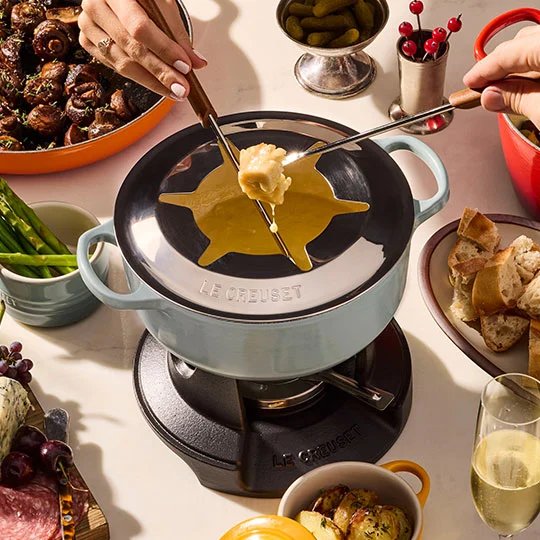
Color sits at the heart of how Le Creuset frames its cast iron history. It describes itself as the first to pioneer colorful enameled cast iron cookware, a claim tied to its origins with French artisans dating back to 1925. That long thread connects directly to the current lineup, where color names such as Cerise, Flame, Flamme Dorée, Nectar, Artichaut, Forêt, Thyme, Sea Salt, Chambray, Azure, and Marseille each represent a distinct finish option.
This range of hues is not incidental, since color choice functions as a core part of how pieces get selected. Cookware shoppers browse by color as much as by shape or material, which reflects a design philosophy built around visible variety. A newer Crucible Knob design, described as a new expression of craftsmanship, shows that detailing continues to evolve even within an established silhouette.
Building a Kitchen Collection with Le Creuset Cookware Materials
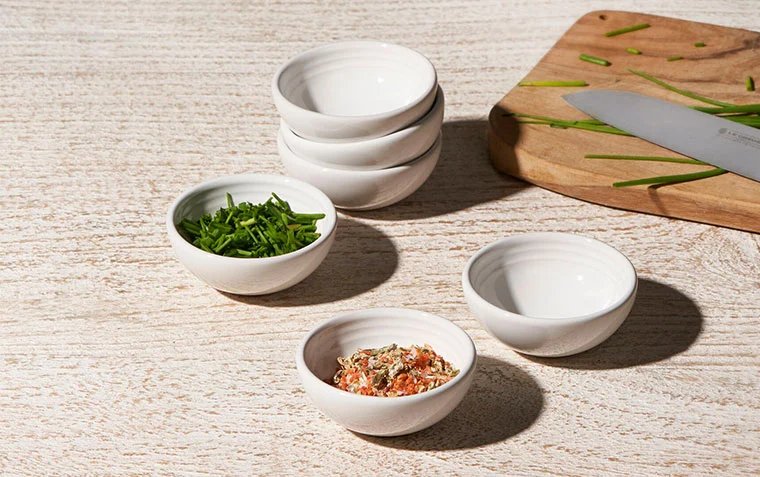
Because Le Creuset spans cast iron, enamel on steel, stainless steel, and ceramic non-stick, building a collection often means mixing materials rather than committing to just one. A kitchen might pair a cast iron Dutch oven for braises with a Tri-Ply Stainless Steel pan for searing, then add a non-stick ceramic piece for eggs. Pieces across cookware, bakeware, and kitchen tools can be chosen individually rather than purchased only as fixed sets.
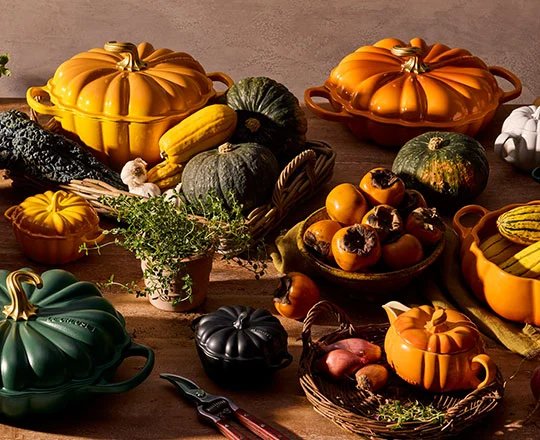
Over 1,400 individual items sit across the cast iron, stainless steel, and non-stick ranges, which gives some sense of how broad the catalog has grown. That scale allows color, material, and collection to all function as separate entry points into the same overall range. Seasonal groupings, such as the Harvest Collection, add another layer by bundling pieces around a theme rather than a single material.
Enameled cast iron cookware remains the throughline across all of this, even as other materials widen what a single kitchen can hold.