Many people rule out prepaid service before ever checking what it actually includes. A handful of prepaid 5G misconceptions keep shoppers locked into contracts they might not need, often based on outdated assumptions about speed, data caps, and fees. This piece looks at where those ideas came from and what actually happens on the ground with Total Wireless.
The ‘Prepaid Networks Are Slower’ Myth: How Total Wireless Uses the Verizon 5G Network

The idea that prepaid phones ride on a weaker, separate network is one of the most persistent prepaid 5G misconceptions out there. Total Wireless runs on the Verizon 5G network, the same infrastructure used by postpaid customers. Coverage area and towers are not divided by payment plan. A phone connects to the nearest available signal regardless of whether the account is prepaid or postpaid.
This matters because speed complaints about prepaid service often come from a different source entirely, such as device age or local tower congestion. Assuming prepaid automatically means inferior signal ignores how carriers actually route traffic. Total Wireless customers are not placed on a separate, lesser tower grid just because their plan is prepaid.
No Data Limits Doesn’t Mean Unlimited Speeds: Understanding Total Wireless Throttling
Unlimited data and unlimited speed are not the same promise, and conflating them is another source of prepaid 5G misconceptions. Total Wireless advertises plans with no data limits, which removes the fear of a hard cutoff mid-month. That is a real and specific feature, separate from any claims about sustained top speed under heavy network load.
Shoppers sometimes expect that an unlimited label guarantees constant maximum throughput in every situation. Network conditions, device capability, and location all still play a role in day-to-day performance. Understanding that distinction helps set realistic expectations before switching providers.
Hidden Fees and Contract Traps: What Total Wireless Actually Guarantees
Surprise charges are one of the oldest complaints lodged against cheaper carriers, deserved or not. Total Wireless states plainly that its offering comes with no surprise fees, positioning itself against the add-on charges associated with some postpaid contracts. That framing speaks directly to buyers who have been burned by line items they did not expect on a monthly statement.
Contract length is another point of confusion. Several Total Wireless plans, including the Total MAX 5G BYO option, are explicitly described as requiring no contract. That structure lets a customer bring an existing phone and activate service without being bound to a multi-year agreement.
Total MAX 5G BYO and Total ALL ACCESS Plans: Clearing Up Price-Lock and Contract Confusion
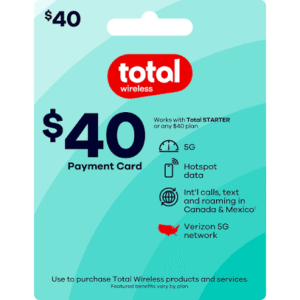
Total MAX 5G BYO is built around people who already own a phone and want to activate it without starting a new contract. The plan is paired with a 5-year price guarantee when paired with Auto Pay, meaning the monthly rate for that plan is locked in for that period rather than subject to sudden increases. That is a concrete commitment, not a vague promise, and it directly answers the fear that prepaid rates creep upward over time.
Total ALL ACCESS is a separate plan aimed at customers adding multiple lines, and it has appeared alongside device offers such as free iPhone 16e promotions for qualifying new customers. Eligibility for these line and device bundles depends on conditions like activating two lines, porting in an external number, and passing identity verification. Reading the specific terms attached to any bundle avoids the common mistake of assuming every prepaid deal works the same way.
Home Internet and Hotspot Capabilities: Beyond Just Phone Service
Treating prepaid wireless as a phone-only category is another gap in how people evaluate these services. Total Wireless lists a home internet plan and a Wi-Fi hotspot option alongside its phone and tablet plans. That expands the use case well past a single smartphone line.
Tablet service is also covered through a dedicated tablet SIM kit, letting a tablet connect independently rather than relying on a phone’s hotspot feature. For households juggling multiple connected devices, having home internet, hotspot, and tablet options under one provider simplifies account management. None of this functionality is exclusive to postpaid providers.
Why People Wrongly Avoid Prepaid Wireless Networks
Much of the hesitation around prepaid wireless comes down to assumptions formed years ago, before networks consolidated and prepaid providers began leasing the same towers as the major carriers. Several specific beliefs keep resurfacing even though they do not match current offerings.
- Some assume prepaid carriers always throttle data heavily, even when a provider explicitly states no data limits.
- Others believe switching away from postpaid always means losing 5G access entirely, regardless of which network the prepaid provider actually uses.
- A common worry is that prepaid plans hide activation or device fees that only appear after signup.
- Many assume a locked-in rate is only available through long-term postpaid contracts, overlooking price-guarantee options on certain prepaid plans.
- Some shoppers think prepaid service cannot support home internet or tablet connections, limiting their search to phone-only comparisons.
Clearing up these prepaid 5G misconceptions matters because the financial and practical gap between prepaid and postpaid has narrowed. Features once considered postpaid exclusives, like price locks and device bundles, now show up in prepaid plans such as those from Total Wireless. Reassessing old assumptions before comparing providers leads to a more accurate picture of what is actually on offer.
Coverage, pricing structure, and extra services are worth checking directly rather than relying on outdated prepaid stereotypes.