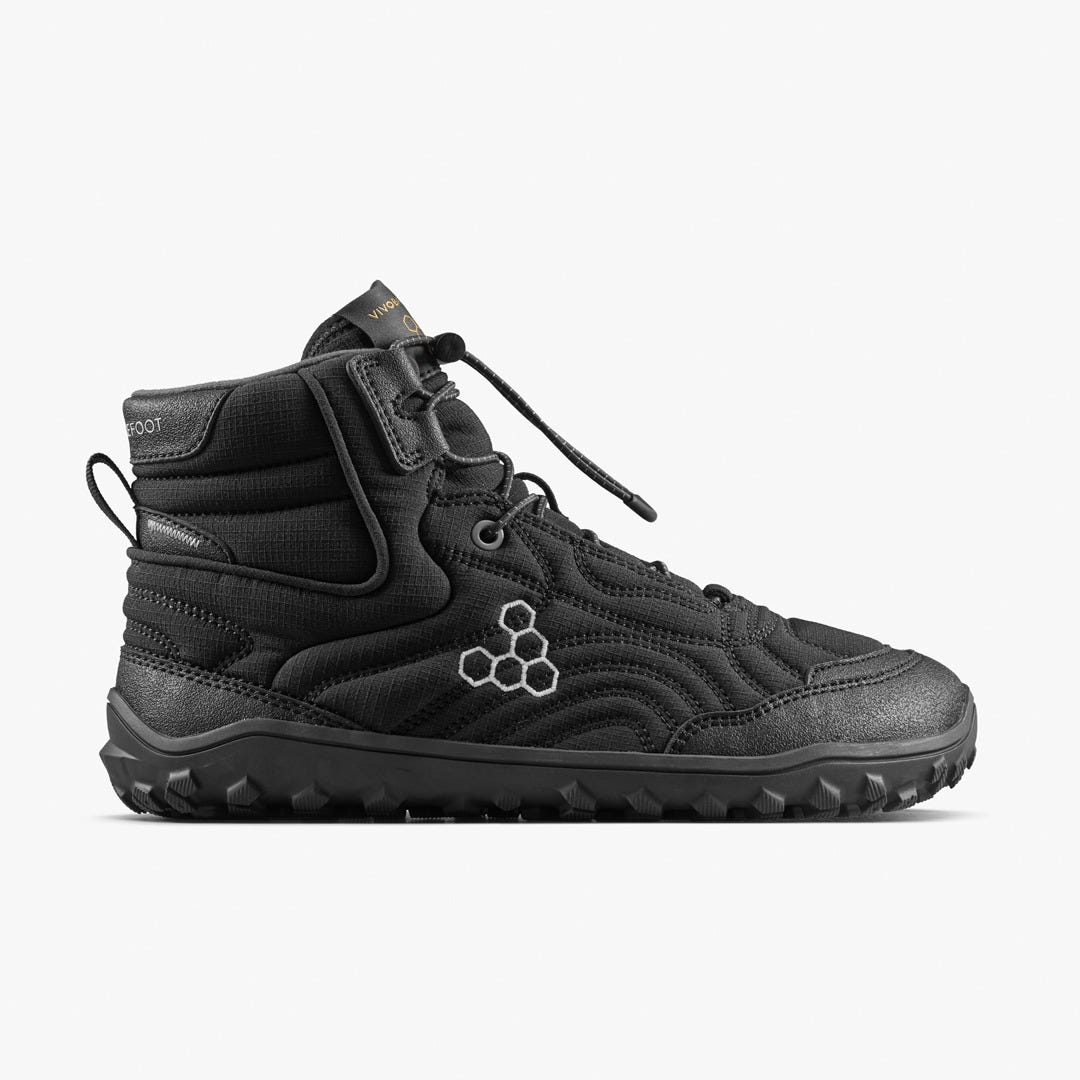
Cold ground and uneven trails ask a lot of winter footwear, and barefoot hiking boots try to answer that demand without losing the thin, flexible feel that defines minimalist footwear. Vivobarefoot builds its outdoor range around that tension, offering boots meant to protect against mud, rock, and freezing temperatures while still letting the foot move the way it would unshod. The Tracker and Gobi lines sit at the center of that range, each aimed at a different kind of winter use.
What Defines Barefoot Hiking Boots in the Vivobarefoot Collection
Vivobarefoot describes its footwear as wide, thin, and flexible, built to stay as close to barefoot as possible. That principle runs through the hiking boots too, which are shaped to support the foot’s natural movement rather than restrict it. Instead of rigid shanks and thick cushioning, the boots use a slim sole and a toe shape that follows the natural spread of toes.
This is what separates barefoot hiking boots from most conventional mountain footwear. Traditional boots often lean on stiff support and heavy midsoles, whereas this range trusts the foot to do more of the stabilizing work itself. The sole stays thin enough to register changes in the ground underfoot, so the boot works more like a contact surface than a barrier.
The Tracker Series: Winter-Ready Barefoot Boots for Mountain Hiking
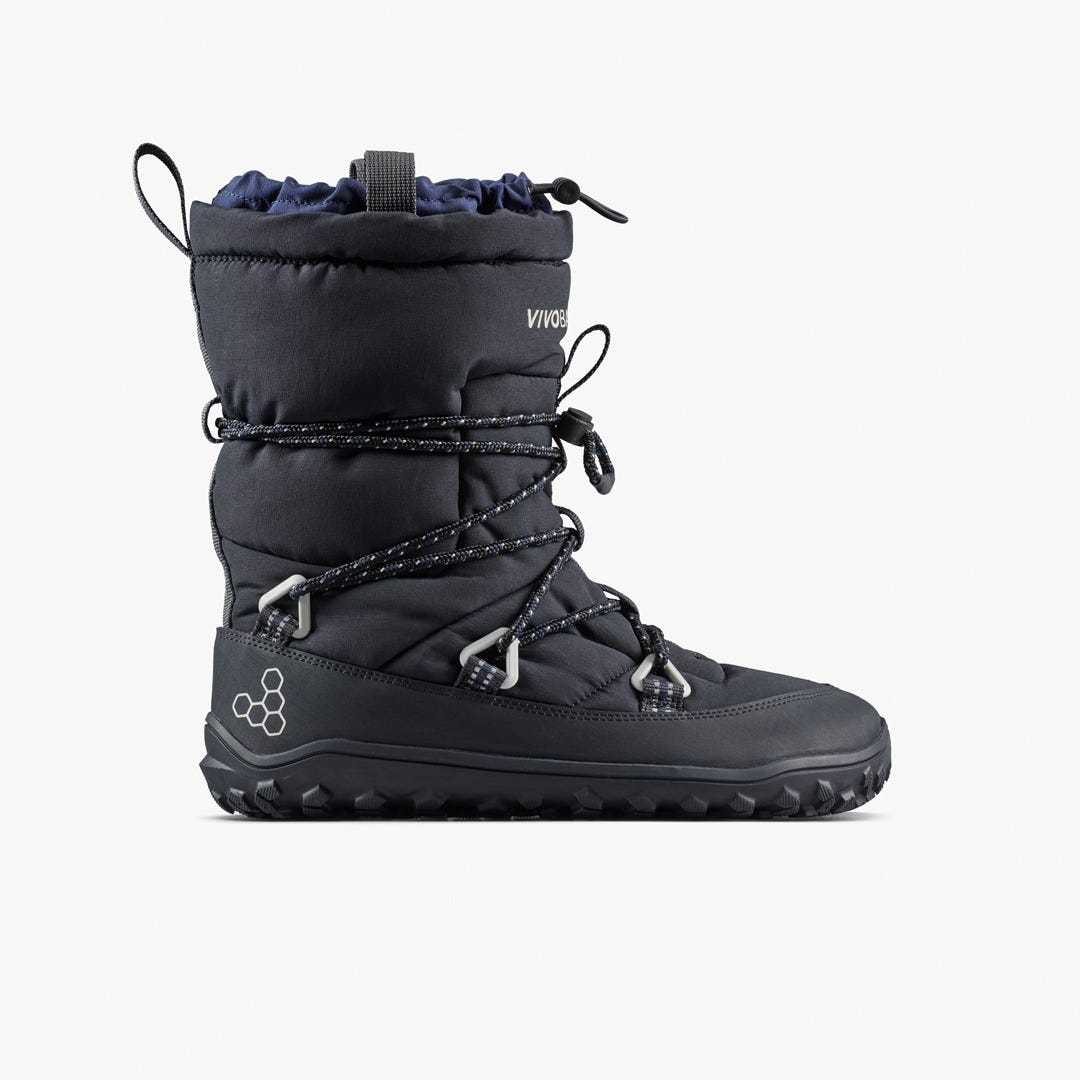
The Tracker range forms the backbone of Vivobarefoot‘s outdoor and hiking lineup. Within it, the Tracker Tova Mid is positioned for protection and connection on the trail, suited to outdoor lifestyle and hiking use. The Tracker Pioneer Boot Waterproof pushes that idea further, adding waterproofing and insulation for expedition travel and adventure use without adding noticeable bulk.
Across the Tracker family, the emphasis stays consistent from one model to the next. Each variant is built to handle variable terrain and weather while keeping the sole thin enough to preserve ground feel. That consistency is part of what sets the Tracker series apart from bulkier mountaineering boots built around rigid support structures.
The Tracker Winter III SG: Specialized Winter Hiking Performance
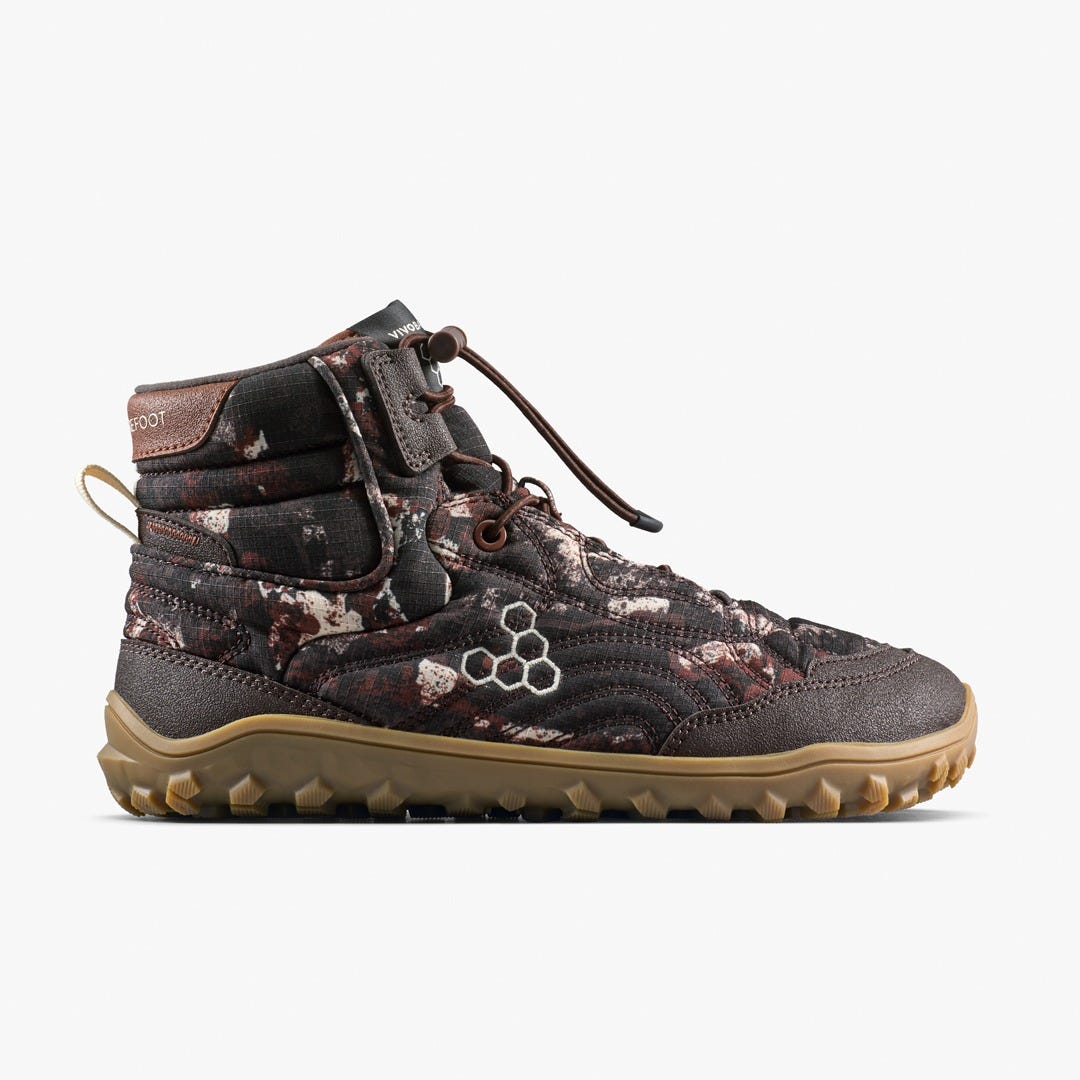
Among the Tracker options, the Tracker Winter III SG is built specifically for winter hiking conditions. It falls under hiking and outdoor lifestyle use, and its stated purpose is to keep the wearer connected to the ground even in cold-weather terrain. Rather than relying on thick rubber lugs and heavy shanks to manage ice, this model keeps the same thin, flexible sole found across the rest of the range.
For anyone looking at barefoot hiking boots suited to snow and ice, the Tracker Winter III SG stands as the most winter-specific option in the lineup. It sits alongside the Tracker Pioneer Boot Waterproof as one of two Tracker variants built around cold-weather and wet-condition performance, rather than general trail use alone.
Gobi Boot II: Warmlined Everyday Barefoot Comfort
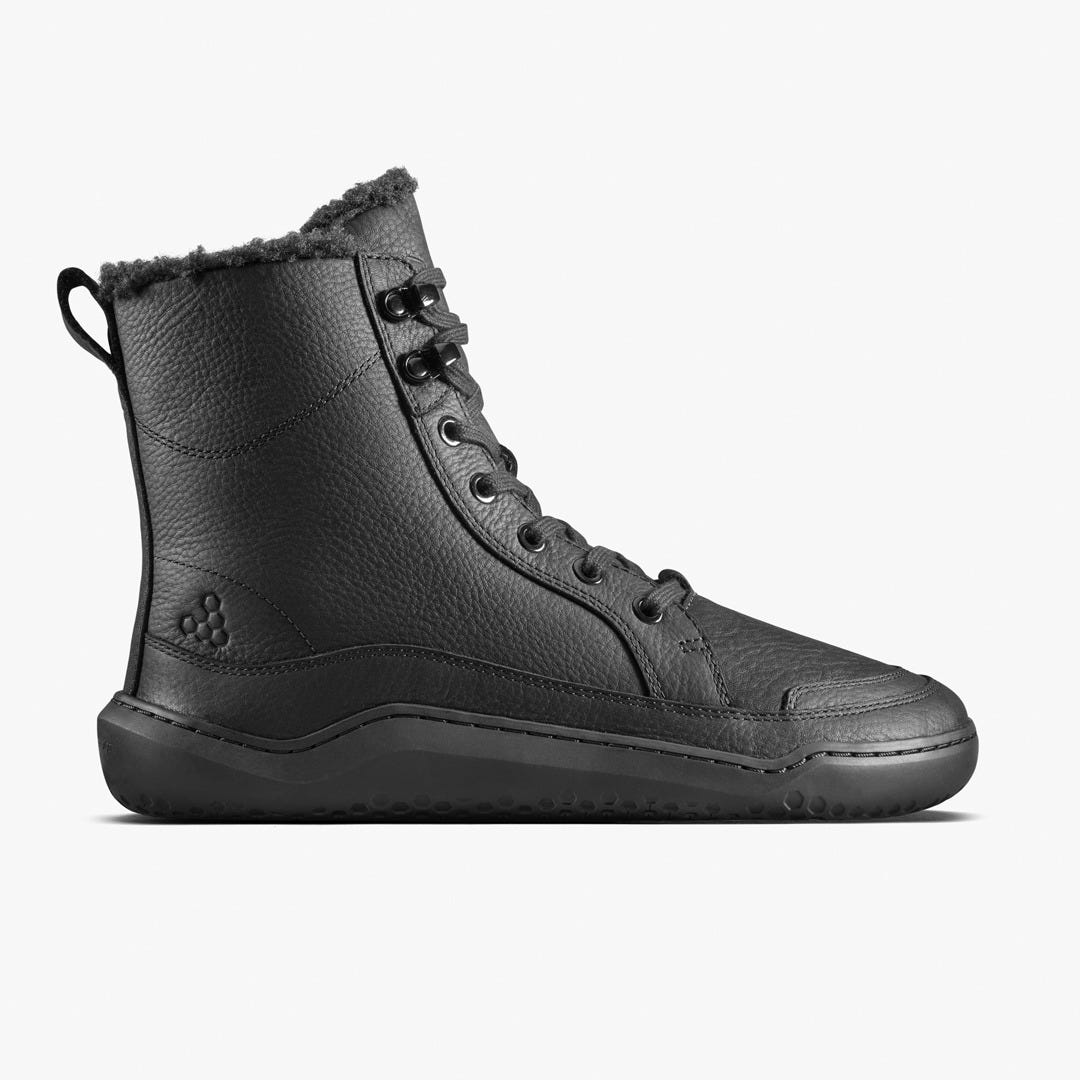
Not every barefoot hiking boot needs to be expedition-grade, and the Gobi Boot II Warmlined reflects that. It is described as a winter-ready classic that meets barefoot freedom, aimed at everyday and work use rather than technical mountain hiking. It carries insulation suited to colder conditions while keeping the thin, flexible build found throughout Vivobarefoot‘s range.
This positions the Gobi Boot II as a bridge between outdoor performance footwear and daily winter wear. Walking to work on icy pavement calls for something different than crossing a mountain trail, and the range reflects that difference through separate product lines rather than one do-everything boot.
Wide, Thin, and Flexible: How Vivobarefoot’s Design Philosophy Differs from Conventional Hiking Boots
Conventional hiking boots tend to prioritize structure, with stiff soles, ankle support, and thick cushioning to absorb impact. Vivobarefoot‘s stated design principle moves in the opposite direction, built to be wide, thin, and flexible so the foot can move as it would unshod. That approach does not disappear once insulation, waterproofing, or winter-specific materials get added to a boot.
As a result, the Tracker and Gobi lines attempt something that can sound contradictory. They add expedition-grade protection, often associated with heavier, stiffer construction, while keeping the slim profile associated with barefoot or minimalist footwear. That combination is central to how these boots are framed for wild, winter-ready adventure.
- The boots use a wide toe box intended to let toes splay naturally instead of being compressed into a narrow shape.
- Sole construction across the range stays thin rather than heavily cushioned, aiming to preserve ground feel on varied terrain.
- Waterproofing appears in specific variants, such as the Tracker Pioneer Boot Waterproof, rather than across every boot in the lineup.
- Warmlining and insulation are concentrated in winter-specific models, including the Gobi Boot II Warmlined and the Tracker Winter III SG.
- Each variant balances protection with barefoot connection differently, ranging from warmlined everyday comfort to expedition-grade hiking performance.
Building Natural Foot Strength on the Trail
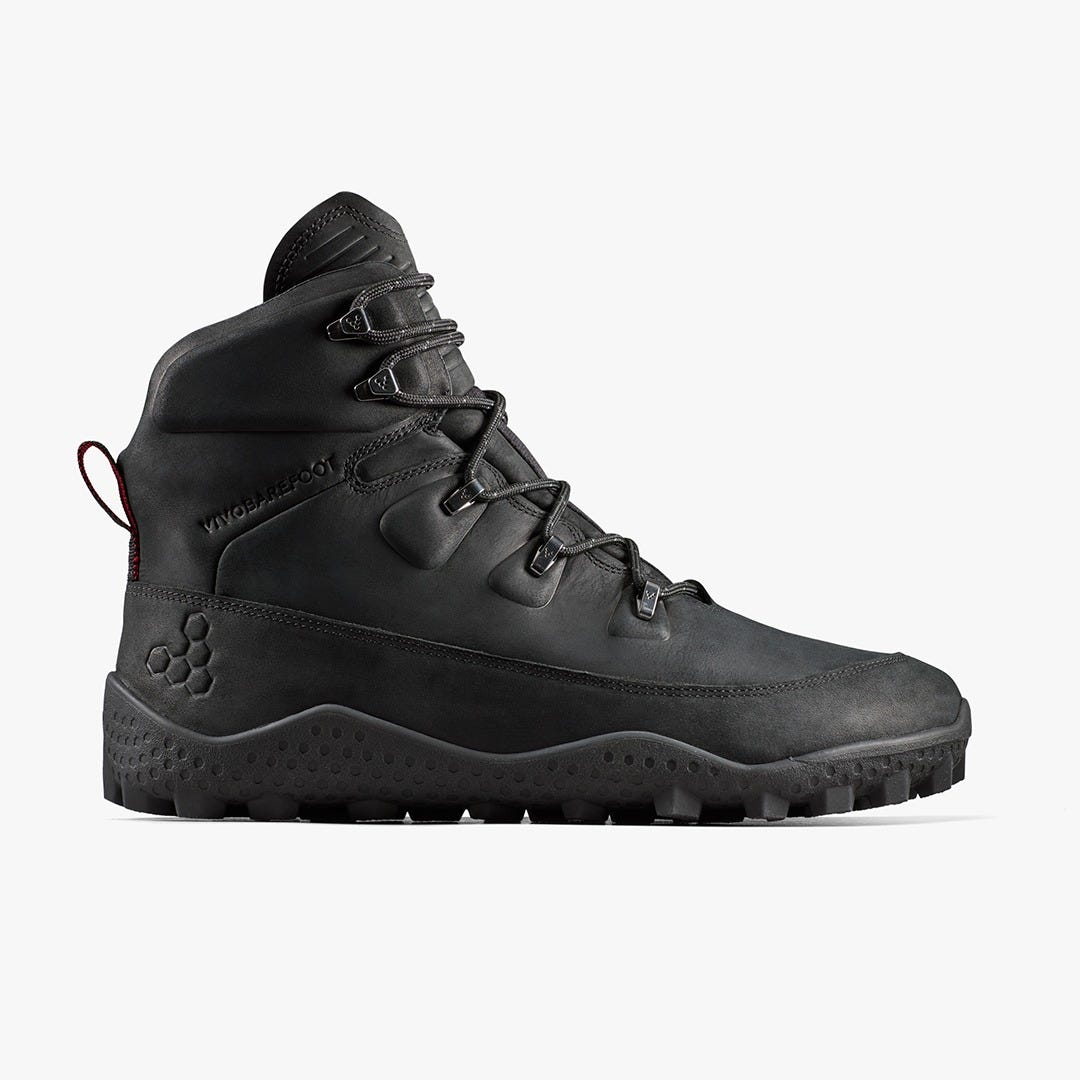
Minimalist and barefoot-style footwear is generally associated with supporting a foot’s natural strength and movement patterns, since less structure in a shoe typically shifts more stabilizing work onto the foot itself. On a mountain trail, that shapes how a boot responds to roots, loose rock, and uneven ground. The same idea carries into winter conditions, where ice and snow add another layer of unpredictability underfoot.
In practice, this means a sole is kept thin enough to transmit information about the terrain rather than block it out entirely. Whether in a lighter Tracker Tova Mid or a heavier Tracker Pioneer Boot Waterproof, the underlying construction principle stays the same. That consistency ties the winter hiking range together, from everyday trail use through to expedition conditions.
Barefoot hiking boots continue to carve out a distinct space between trail runners and heavy-duty mountaineering boots. The Tracker and Gobi lines show how that space can stretch from icy commutes to winter mountain routes without losing its thin, flexible core.